Entering Buenos Aires Milongas Where the Dancing Is the Point
Tango in Buenos Aires is a social ritual, not a dinner show. Learn the codes of the milonga floor and dance instead of watching.
- Flag
-

- ISO code
- AR
- Population
- 44,494,502
- Currency
- ARS
- Dial code
- +54
Start with the Floor Code, Not the Souvenir Shop
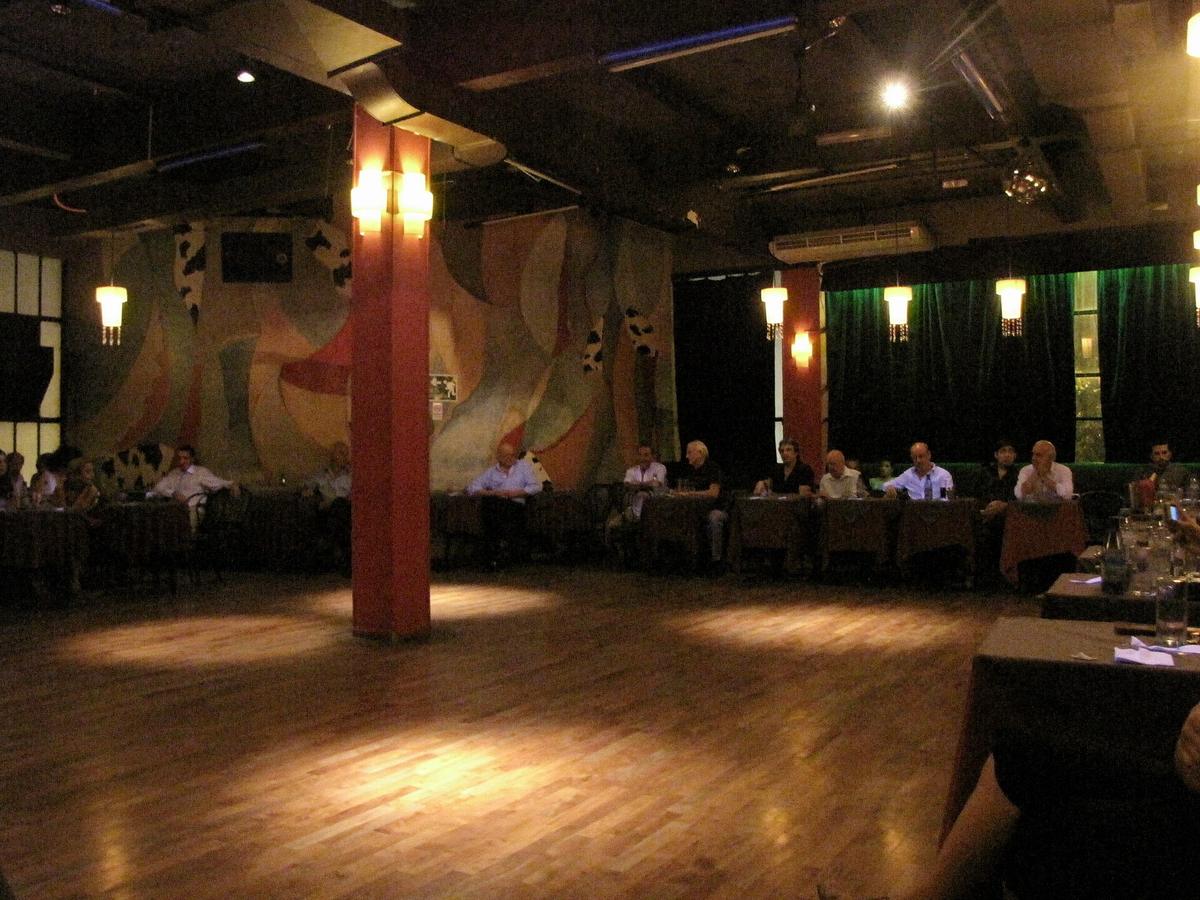
You walk into a Buenos Aires dance hall and nobody speaks. Couples move counter clockwise around a crowded floor in a tight, continuous stream. No one passes. No one talks while dancing. No one teaches. Stop in the lane and you cause a collision. You recognize this. It is exactly the discipline of a New Orleans second line: do not cut across the brass band, do not step in front of the grand marshal's umbrella, and do not break the rolling, collective motion. This is not a performance. It is a social contract with music as the only authority. The tango you see in a dinner show is to this what a Bourbon Street cover band playing "When the Saints" is to a Sunday morning at the Tremé Baptist Church. Both exist. Only one is real.
Buy the Cabeceo, Not the Ticket Package
You do not walk up to someone and ask for a dance. You make eye contact from across the room. You nod. The other person nods back. That is the invitation. It is called the cabeceo (the head movement) and the mirada (the look). Verbal invitations are rare in traditional halls. For a visitor from New Orleans, this reads as a refined version of the musicians' glance on Frenchmen Street where the trumpet player nods at the guitarist to take the next solo. You do not shout requests. You signal. Entry to an informal dance costs ARS 3,000 to 8,000 per person as of 2025 rates published by the venues themselves. The tourist tango dinner show costs USD 50 to 150 per person. One buys you participation in a living culture. The other buys you a seat at a spectacle. Choose accordingly.
Where The Real Dances Happen
Salon Canning in Almagro operates Friday and Saturday nights. La Viruta in Palermo runs Wednesday through Sunday, with a class at 20:00 followed by the dance from 23:00. Milonga de los Consagrados in Centro happens Saturday afternoons with a class before the dance. These are not venues you enter without preparation. You wear comfortable shoes with suede or smooth leather soles. No street shoes. No heels that mark the floor. Do not arrive expecting to talk through the set. The tanda structure dictates your evening: three or four songs from the same orchestra or style, then a cortina (a non tango interlude of about thirty seconds). When the cortina plays, you leave the floor. You reset. You start the cabeceo again. This is the grammar of the night. Learn it before you go or sit and watch until you do.
Neighbourhoods That Matter For Tango
San Telmo peaks Thursday through Sunday. Historic venues include El Beso and La Catedral. Palermo runs Wednesday through Sunday. Almagro and Boedo peak Friday and Saturday. Villa Crespo peaks Friday and Saturday at Club Sunderland. These are not districts you treat as sightseeing stops. You go to one per night. Each has its own regulars, its own floor density, its own unspoken character. The Calle Corrientes version of tango the tourist agencies sell is not the one you find at Club Sunderland on a Friday at 1 a.m. That is the point.
Carry Cash. Not a Card. Cash.
Many dance halls accept only efectivo. So do the folklore peñas in Salta and Jujuy where the strongest Argentine folk music tradition lives. The credit cards you rely on in Buenos Aires tourist shows will not work at a Saturday night dance in Almagro or a peña in a Salta side street. Exchange cash through the dólar blue rate, not the official bank rate. The parallel rate is published daily by Ámbito Financiero and DolarHoy.com. It is not an official rate, but it is the rate the venue operator uses. This norm changes with currency controls. Verify the dólar blue rate within thirty days of your departure date. Bring USD in crisp, non sequential bills. Small denominations. The airport and hotel exchange desks offer worse rates than the cuevas (informal exchange houses) you find through word of mouth in San Telmo or Palermo. Ask the owner of the venue you plan to visit. They will tell you where to go.
Seasons Are Reversed. Pack Accordingly.
Buenos Aires average high in January is 30°C. July is 15°C. You are going in January? That is midsummer. You are going in June? That is winter. The dance floor is crowded year round, but the air conditioning at La Catedral in a January heatwave is weak. Dress in layers you can remove. Bring a fan that fits in your pocket. The same rule applies to folklore festivals. The Cosquín festival runs nine days in the last week of January. The Jesús María festival runs ten days in the first half of January. Both are in Córdoba province. Both are outdoors. Both require cash for entry and food. Neither operates like a ticketed arena show. You arrive, you find a spot, you stay.
The Tango You Want is at 1 A.M., Not 8 P.M.
New Orleans taught you this. The real music starts after 10 p.m. and runs past 2 a.m. The dance follows the same clock. The early evening session at La Viruta is for the class and the beginners. The floor clears around midnight. The experienced dancers arrive after midnight. The floorcraft gets tighter. The cabeceo gets faster. The music gets better. Arrive at 8 p.m. expecting the real thing and you will see tourists taking selfies and couples practicing steps. That is not the living dance. The living dance happens when the people who have been dancing for twenty years take the floor and the cortina is the only break. You leave when you cannot walk. That is the code.
| Venue | Neighbourhood | When To Go | Entry Cost (2025) | Crowd Vibe |
|---|---|---|---|---|
| La Viruta | Palermo | Wed Sun, class 20:00, milonga 23:00 | ARS 3,000 5,000 | Mixed ages, many beginners, high tolerance for errors |
| Salon Canning | Almagro | Fri Sat nights | ARS 5,000 8,000 | Experienced regulars, strict floor, advanced cabeceo culture |
| Milonga de los Consagrados | Centro | Saturday afternoons | ARS 4,000 6,000 | Older crowd, slower pace, class included before dance |
Skip the Show. Go to the Club.
Your New Orleans instinct already knows this. The best music is not on a stage with ticketed seating. It is in a dim room where the musicians are playing for each other and you are lucky to be in the room. The dance hall is that room. The tourist tango dinner show is the House of Blues on a Saturday night with a $40 cover and a two drink minimum. One is a transaction. The other is a culture. Book a flight to Buenos Aires. Arrive at Ministro Pistarini International Airport (EZE). Take a taxi to Palermo. Go to La Viruta on a Wednesday after your class. Sit at the bar. Watch the cabeceo. Nod at someone who nods back. Dance the first tanda. Leave the floor when the cortina plays. Do it again. That is your Argentina music travel. That is what you came for.
Frequently Asked Questions
Do I need a partner to go to a milonga?
No. The cabeceo system means you sit alone and signal to people across the room. Solo dancers attend regularly. Many halls have a surplus of women or men on different nights. La Viruta and Milonga de los Consagrados offer classes beforehand where you can meet people without the cabeceo pressure.
How is a milonga different from a tourist tango show?
A milonga is a social dance with strict floorcraft codes, cash entry around ARS 3,000 to 8,000, and no talking during the tanda. A tourist show is a staged performance with fixed seating, USD 50 to 150 pricing, and no floor rules. One is participatory. The other is spectator.
What do I wear to a milonga?
Comfortable shoes with suede or leather soles. No street shoes. No heels that scratch the floor. Women often wear dresses or skirts that allow movement. Men wear slacks and collared shirts. No shorts. No sneakers. Dress for a night of dancing, not a night of standing.
What happens if I break the floor code?
You will be corrected quickly, either by a silent glare or by a more experienced dancer who blocks your path. The worst violation is stopping in the line of dance. If you must stop, exit to the center of the floor or the edge. Do not teach on the floor. Never talk through a tanda.