A New Orleans Dancer's Guide to Buenos Aires Milongas
Where porteños actually dance tango in Buenos Aires, from La Catedral's grungy floor to Salon Canning's strict codes, for the New Orleans dancer who gets participation.
- Flag
-

- ISO code
- AR
- Population
- 2,891,082
- Currency
- ARS
- Timezone
- America/Argentina/Buenos_Aires
A New Orleans Dancer’s Guide to Buenos Aires Milongas
About 120 milongas operate in Buenos Aires as of 2025, according to the city's independent milonga registry. Almost all of them are participatory, not performative. The dinner-and-show tango productions aimed at tourists cost USD 80 to 250 per person and deliver choreographed spectacle. A milonga costs ARS 3,000 to 8,000, roughly 3 to 8 US dollars at the blue rate, often includes one drink, and expects you to dance. If you are a New Orleans dancer who has stepped onto the polished wood of Preservation Hall or moved with a second-line parade through the Marigny, you already understand the core difference. The real music happens when you join it. The real tango in Buenos Aires happens on the floor at 2 a.m., surrounded by Porteños who have been dancing for decades and who will judge your navigation before they judge your steps.
The Códigos: Why the Cabeceo is Not Optional
New Orleans teaches you to read a room. On Frenchmen Street, you know which club has a band worth hearing by the crowd spilling onto the sidewalk. You know not to step into a second-line parade without committing to the rhythm. A milonga works the same way, but with stricter rules.
The only acceptable way to invite someone to dance is the cabeceo: sustained eye contact followed by a small nod from your seat. Walking across the floor to ask verbally, or approaching someone's table, is a violation of the code. You sit at a table that surrounds the dance floor, and you never cross the floor holding a drink or a conversation. When you accept a tanda, you commit to three or four songs from the same orchestra or style. A cortina of non tango music, 30 to 60 seconds of rock, pop, or electronica, marks the end of the tanda. You dance every song in the tanda with the same partner, and when it ends, the man escorts the woman back to her table. The courtesy is not optional. It is how the floor stays functional through 120 active gatherings every week.


Two Milongas, Two Energies: La Catedral and Salon Canning
La Catedral in Almagro: The Maple Leaf of Buenos Aires
Arrive at La Catedral no later than 20:00 if you want the beginner class that runs before the dancing starts at 22:00. The space is a grungy converted warehouse in Almagro, the barrio with a relaxed young atmosphere. Expect mismatched furniture, peeling paint, fairy lights, and a floor that has absorbed decades of sweat and missteps. This is the venue for dancers who learned on the unlevel floors of French Quarter bars and who trust their balance over their appearance. The crowd skews younger and international, and the code is enforced but not punishing. If you misread a cabeceo or block the lane, a polite look will correct you. The energy peaks between 01:00 and 03:00, which mirrors the late night music window that defines New Orleans. La Catedral closes around 04:00, which means you can still catch a nightcap on the way home. Skip the dinner-show productions in Puerto Madero or Barracas. Spend 8 dollars on entry here instead.
Salon Canning in Palermo: The Preservation Hall of Buenos Aires
Salon Canning in Palermo, the neighborhood with the highest concentration of milongas in the city, is the opposite of La Catedral in every way that matters. The main floor has a sprung wood surface, excellent acoustics, and a reputation for ruthlessness. This venue does not admit beginners on the central pista. The dancers here have been dancing for years, and they expect you to navigate the lane without hesitation, collisions, or backstepping. If you are not solid on your ochos and your floorcraft, use the alternative pista in the basement, called Canning Alternativo, which is more forgiving. The dancing starts at 22:00 and the peak comes between 01:00 and 03:00, same as La Catedral. Do not wear rubber soled shoes on either floor. You need leather or suede soles, the same kind you would wear for social dancing in New Orleans. No sneakers, no shorts, no gym clothes. Salon Canning is not a place to learn. It is a place to test what you have learned.
Sunday is the Night to Build Your Week Around
Sunday is the day of highest milonga activity in Buenos Aires. Many venues hold afternoon and evening sessions, and the city's social dance calendar pulses hardest on this day. If you have only one night free, make it Sunday.
Three Sunday Picks
Book a class at La Viruta in Palermo, which offers an absolute beginner class at 21:00 and dancing from 23:00 with a main floor for rock and tango nuevo and a basement for traditional tango. Or go to El Beso in Balvanera for a class at 20:30 and a session from 22:00 that skews traditional and local. Or try Maldita Milonga in San Telmo, the barrio with the most relaxed young atmosphere, class at 20:30, dancing from 22:00. The Sunday evening slot means you can arrive at 20:00 for the class, dance until 03:00, and still have Monday to recover. Do not try to do a tango show on Sunday night. The dinner-show productions run nightly, but Sunday is for dancing, not watching.


| Milonga | Barrio | Beginner Class Time | Milonga Start | Accessibility for Beginners |
|---|---|---|---|---|
| La Catedral | Almagro | 20:00 | 22:00 | Welcoming, relaxed atmosphere, beginner friendly |
| La Viruta | Palermo | 21:00 | 23:00 | Dual levels: basement for traditional, main floor for rock/tango nuevo |
| El Beso | Balvanera | 20:30 | 22:00 | Traditional, local crowd, code enforced but not punishing |
| Maldita Milonga | San Telmo | 20:30 | 22:00 | Youngest crowd, most relaxed code, good for building confidence |
Common Questions
How much does a milonga cost compared to a tango show?
A milonga costs ARS 3,000 to 8,000 (USD 3 to 8 at the blue rate) and usually includes one drink. A dinner show costs USD 80 to 250 per person. The milonga is participatory. The show is passive.
What do I wear to a milonga?
Leather or suede soled shoes only. No rubber soles. No sneakers, shorts, or gym clothes. Traditional venues in Villa Urquiza enforce dress codes strictly. Almagro and San Telmo are more relaxed but still expect dancers to dress for the floor.
Can I learn tango in Buenos Aires before I go to a milonga?
Yes. La Viruta, La Catedral, El Beso, and Maldita Milonga all offer classes for absolute beginners before the dancing starts. DNI Tango and Escuela Argentina de Tango run daily group classes in Palermo and Balvanera. Book ahead.
Which milonga should I avoid if I am a beginner?
Salon Canning (main floor), Club Gricel, and Sunderland Club do not admit beginners on the central pista. They have strict codes and high level expectations. Use the basement floor at Canning or stick to La Catedral and La Viruta.
Read next
-
 Buenos Aires Beyond the Milonga Late Hours and Neighbourhood Life
Buenos Aires lives in its neighbourhoods and after midnight. Skip the staged milonga and find the city in Palermo's late dinners, San Telmo's Sunday market, and Chacarita's old cafes.
Buenos Aires Beyond the Milonga Late Hours and Neighbourhood Life
Buenos Aires lives in its neighbourhoods and after midnight. Skip the staged milonga and find the city in Palermo's late dinners, San Telmo's Sunday market, and Chacarita's old cafes.
-
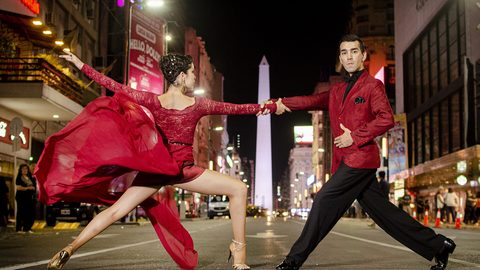 Tango as a Living Dance in Buenos Aires, Not a Dinner Show Spectacle
Tango in Buenos Aires is a social ritual, not a dinner show. Learn the codes of the milonga floor and dance instead of watching.
Tango as a Living Dance in Buenos Aires, Not a Dinner Show Spectacle
Tango in Buenos Aires is a social ritual, not a dinner show. Learn the codes of the milonga floor and dance instead of watching.
-
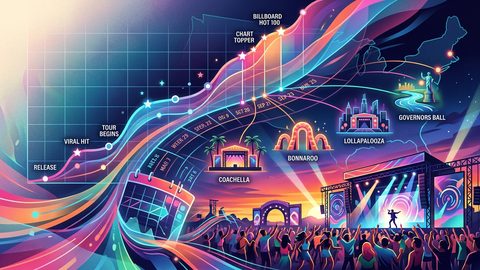 How an Artist's Chart Run Should Shape Your US Festival Calendar
Track an artist's chart momentum to predict US festival billing tiers and book tickets before prices and crowds outpace the experience.
How an Artist's Chart Run Should Shape Your US Festival Calendar
Track an artist's chart momentum to predict US festival billing tiers and book tickets before prices and crowds outpace the experience.