A New Orleanian's Guide to Berlin Techno Culture
How Berlin's techno door policy and club heritage compare to New Orleans' open-door music culture, for the nocturnal music traveler considering their next pilgrimage.
- Flag
-

- ISO code
- DE
- Population
- 3,426,354
- Currency
- EUR
- Timezone
- Europe/Berlin
A New Orleanian’s Guide to Berlin Techno Culture
Berlin's techno scene is not a ticketed event. You do not buy a pass and walk in. You submit to a judgement. New Orleans throws its doors open: Frenchmen Street clubs charge no cover, Preservation Hall lets you queue until the bench fills, and the brass band on Royal Street plays for whatever you drop in the case. Berlin reverses the polarity. The gatekeeper decides if you belong. The door policy at the world's most famous club is only the loudest example of a citywide culture that treats entry as a privilege, not a transaction.
This is a comparative ethnography of two nocturnal religions. New Orleans and Berlin both build their identities around ritual all night immersion. One uses chaos and welcome as its engine. The other uses opacity and rejection. If you are coming from the French Quarter's humid open door world, you need a translation guide for the cold, dark temple on the other side of the Atlantic.

The Two Cities and Their Gatekeeping Logic
New Orleans does not gatekeep because it cannot afford to. The city's music economy runs on volume and spontaneity. A brass band at 2 a.m. on Frenchmen Street needs a crowd to feed off, and that crowd needs to feel the air change when the tuba drops. The door stays open because the ritual requires bodies in motion, strangers bumping shoulders, sweat mixing with the sweet decay of the street. You do not need to prove you understand jazz to walk into a club on Frenchmen.
Berlin gatekeeps because the scene emerged from abandoned power plants and department store vaults in the early 1990s, spaces that were not meant to hold 1,500 people for 48 hours. The techno lineage in this city started in vacant GDR era buildings in Friedrichshain and Mitte, where the music was loud, the walls were thick, and the party was a secret you had to know how to find. That origin created a culture of intentionality. You do not stumble into the main club. You decide to go. You prepare. You learn the rules. The door policy is the first test of whether you understand what happens inside.
Berghain: the Cathedral with a Velvet Rope Made of Silence
The Building And The Door
The club opened in 2004 inside a former heating plant built between the 1950s and 1980s. Its predecessor Ostgut ran from 1998 to 2003 on the same ground. The concrete shell and 18 meter ceilings create an acoustic chamber that makes the music physical. You feel the kick drum in your sternum from the coat check.
The door policy has no formal criteria. Rejection happens at the discretion of the selectors. The primary face is Sven Marquardt, the heavily tattooed former East Berlin photographer whose bored expression has become the symbol of the club's inscrutability. He and the other selectors make snap decisions based on factors that regulars describe as consistent but unstated. Group sizes over two or three get cut. Visible intoxication means rejection. Loud conversation in the queue, phone use, obvious tourist appearance, lack of German language, age that looks under 21. These all count against you.
Inside The Walls
The no photos rule is absolute. Phone cameras get taped over with stickers at entry. Enforcement is immediate. You will be removed and banned if you are caught pulling your phone out on the dance floor. This rule is standard across Sisyphos, Kater Blau, about blank, and KitKatClub. At Tresor and RSO the enforcement is variable but the expectation is the same: be present.
The club runs continuous from Saturday midnight through Monday late morning. Queue on Sunday morning between 06:00 and 12:00. That window gives you a 30 to 90 minute wait instead of the 2 to 4 hours you face Saturday night. The crowd is more seasoned. The energy is deeper. Pay cash. Cards are not accepted at the door. The entry fee was 25 to 30 euros in 2024, published by the club's official channels and subject to annual revision.
In September 2016, the Berlin Brandenburg Fiscal Court ruled that the venue qualifies as a high culture institution, assigning it the reduced VAT rate of 7 percent on entry fees, the same rate applied to museums, theatres, and concert halls. The case number is 7 K 7088/13. A club that was once a secret in a former heating plant is now a heritage institution by tax law. While Berlin elevates techno to high culture, Sevilla offers a parallel path for travellers drawn to raw, undiluted tradition in its hidden flamenco corners.
Beyond Berghain: the Ecosystem and the Tresor Vault
The Other Temples
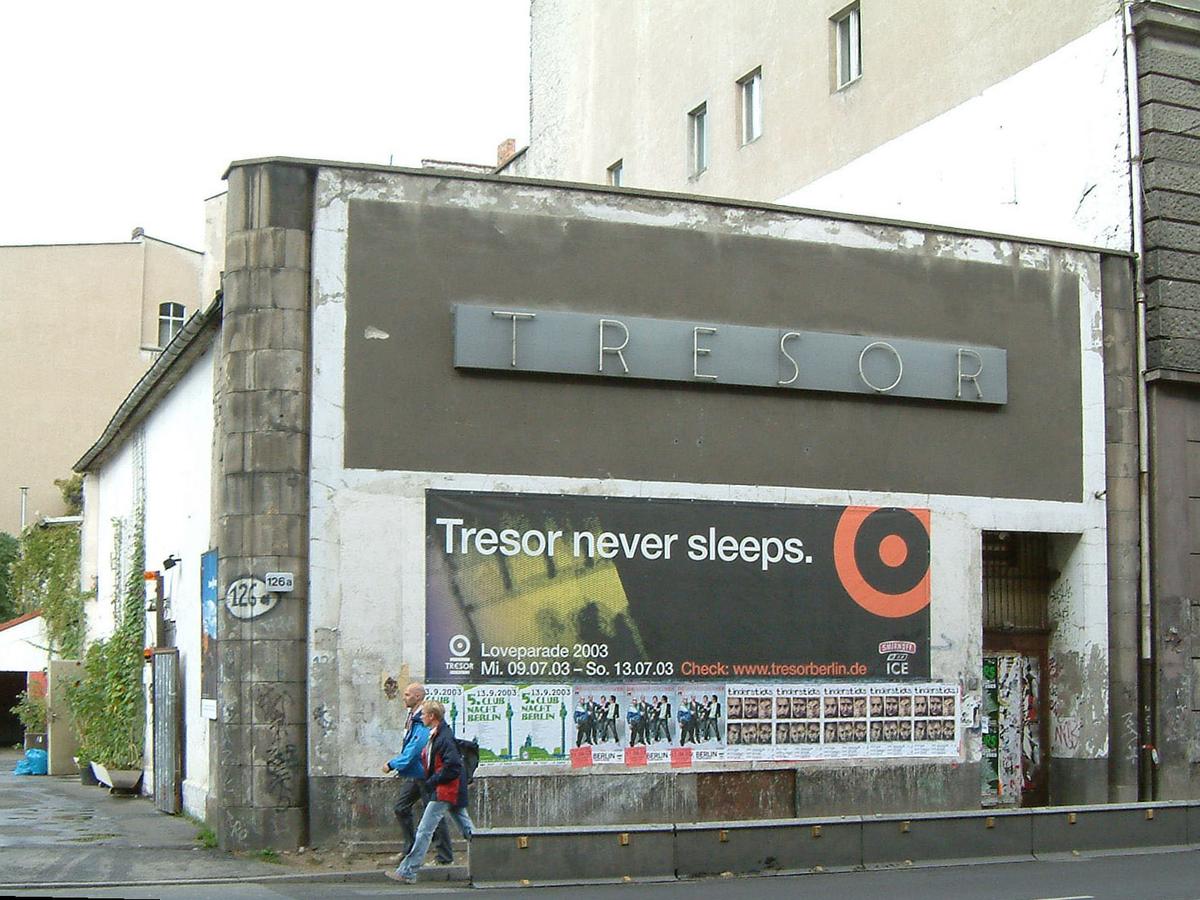
The most famous club in Berlin is not the only one with a door policy that requires strategy. The broader techno ecosystem includes Tresor, founded in March 1991 in the vault of the former Wertheim department store on Leipziger Strasse, a space that is literally a bank vault. That original location closed in 2005. The club has operated since 2007 in Kraftwerk Mitte at Kopenicker Strasse 70, a former power plant. The vault of the original location, with its steel door and underground concrete chambers, has entered club lore as a site of near religious significance. It is not open to the public. You cannot visit it. Its status as a birth site of the unified Berlin techno scene is undisputed.
Sisyphos runs Friday 23:00 through Monday morning continuously during its operating season, then closes December through March. Its location in Lichtenberg, an industrial district east of the centre, means the party is even more isolated. Kater Blau, by the Spree river in the Holzmarkt complex, is slightly more forgiving on the door but enforces the same no phones rule. About blank, in Friedrichshain, runs a feminist and queer inclusive door policy that is still opaque, just differently. RSO opened in 2021 in Treptow and Club OST opened in 2023 on the Spree at Alt Stralau. The scene keeps adding rooms.
Where To Sleep
Book accommodation within walking or short night bus distance of these clubs. Friedrichshain, Kreuzberg, Neukolln north of Sonnenallee, and Mitte near Alexanderplatz are the neighbourhoods where returning at 10 a.m. is normal. The U Bahn runs 24 hours Friday and Saturday nights on lines U1 through U9. The night bus network covers the gaps. The S Bahn Ring lines S41 and S42 also run all night on weekends.
The Marathon Rhythm
The Sunday to Monday marathon mirrors the schedule of a New Orleans Jazz Fest after party. You finish the main fest at 7 p.m., eat, rest, and head to the Maple Leaf at 11 p.m. to hear a brass band play until the sun comes up. Berlin does the same thing, but the sun comes up at 4:45 a.m. in summer and you are still dancing at 3 p.m. Monday afternoon. The physical toll is identical. In New Orleans the crowd spills onto the street and the party follows you. In Berlin the walls hold it tight.

What to Do with the Door Rejection
Expect rejection on your first attempt. This is not a failure. It is part of the education. The honest caveat about Berlin's techno culture is that it does not care about your vacation schedule. It does not care that you flew from Louisiana to stand in this queue. The door selectors are not being rude. They are protecting a space that treats dancing as a serious practice. If you treat it like an item to tick off a list, you will be turned away. Treat it like a pilgrimage where the rejection is part of the journey, and you will find your way in. When you do, the hours will dissolve and you will understand why a former heating plant is taxed like a museum.
Skip the main door and work through the ecosystem. Tresor is easier to enter and its history is deeper. The original vault from 1991 is a UNESCO designated heritage site that cannot be opened to the public but whose symbolism anchors the entire scene. Go to Tresor first. Learn what the low ceiling and the metal fittings do to the bass. Then try the main club on Sunday morning. You will arrive with better instincts.
Berlin Techno Door Policy: Seven Questions
Is there a dress code for Berghain?
No formal dress code. Black clothing is common but not required. The selectors reject for group size, visible intoxication, loud behaviour, and obvious tourist appearance. There is no checklist of approved outfits.
Can I leave and come back to Berghain on the same wristband?
Yes. The wristband allows same day re entry. You use a separate re entry queue. Make sure the bouncer sees your wristband when you return.
What time on Sunday should I queue for Berghain?
Arrive between 06:00 and 12:00 on Sunday. The queue is 30 to 90 minutes. Saturday night queues run 2 to 4 hours with a higher rejection rate.
Can I take photos inside Berlin techno clubs?
No. Berghain, Sisyphos, Kater Blau, about blank, and KitKatClub enforce a strict no photos policy. Your phone camera gets taped over with a sticker at entry. Tresor and RSO are less strict but the expectation is the same. Do not test it.
What is the entry fee for Berghain?
The fee was 25 to 30 euros in 2024, published by the club. Bring cash. Cards are not accepted at the door. The rate is subject to annual revision.
Is Tresor's original vault open to the public?
No. The original vault at Leipziger Strasse closed in 2005 and is not accessible. Its significance as the birthplace of Berlin techno is recognised by UNESCO heritage status. The current Tresor operates at Kraftwerk Mitte.
Which Berlin neighborhoods should I stay in for late night returns?
Friedrichshain, Kreuzberg, Neukolln north of Sonnenallee, and Mitte near Alexanderplatz. The U Bahn runs 24 hours on weekends. The night bus network covers all districts when trains stop.
Read next
-
 Where to Stay in Berlin for Nights Out That End at Sunrise
Where to stay in Berlin for nightlife: Friedrichshain for club proximity, Kreuzberg for bars, Neukölln for the edge, and Mitte only if you need quiet.
Where to Stay in Berlin for Nights Out That End at Sunrise
Where to stay in Berlin for nightlife: Friedrichshain for club proximity, Kreuzberg for bars, Neukölln for the edge, and Mitte only if you need quiet.
-
 What to Do in Berlin Beyond the Techno Clubs and Famous Wall
Berlin is more than Berghain and Brandenburg Gate. Here are the best daytime districts, sprawling parks, lakes, and museums to explore beyond the bass bins.
What to Do in Berlin Beyond the Techno Clubs and Famous Wall
Berlin is more than Berghain and Brandenburg Gate. Here are the best daytime districts, sprawling parks, lakes, and museums to explore beyond the bass bins.
-
 Best Time to Visit Berlin by Season for Weather Crowds and Culture
Berlin's character changes dramatically with the seasons. Find the right month for lake swimming, Christmas markets, or gallery hopping without the tourist crush.
Best Time to Visit Berlin by Season for Weather Crowds and Culture
Berlin's character changes dramatically with the seasons. Find the right month for lake swimming, Christmas markets, or gallery hopping without the tourist crush.
-
 Getting Around Berlin Without a Car Using the U-Bahn S-Bahn and Tram
Navigate Berlin's U-Bahn, S-Bahn, tram, and bus system with confidence. A practical guide to zones, tickets, and the crucial validation step tourists miss.
Getting Around Berlin Without a Car Using the U-Bahn S-Bahn and Tram
Navigate Berlin's U-Bahn, S-Bahn, tram, and bus system with confidence. A practical guide to zones, tickets, and the crucial validation step tourists miss.
-
 Germany Music Travel Guide Techno Clubs and the Door Policy
Plan a German techno pilgrimage with this guide to club door policies, city-by-city scene comparisons, and practical tips for international visitors navigating Berlin, Hamburg, and beyond.
Germany Music Travel Guide Techno Clubs and the Door Policy
Plan a German techno pilgrimage with this guide to club door policies, city-by-city scene comparisons, and practical tips for international visitors navigating Berlin, Hamburg, and beyond.
-
 How an Artist's Chart Run Should Shape Your US Festival Calendar
Track an artist's chart momentum to predict US festival billing tiers and book tickets before prices and crowds outpace the experience.
How an Artist's Chart Run Should Shape Your US Festival Calendar
Track an artist's chart momentum to predict US festival billing tiers and book tickets before prices and crowds outpace the experience.