Bahian Drums, Pelourinho on a Tuesday and Carnaval Beyond the Blocos
- Flag
-

- ISO code
- BR
- Population
- 2,711,840
- Currency
- BRL
- Timezone
- America/Bahia
The Wrong Assumption About Salvador’s Music Calendar
Most visitors arrive in Salvador expecting Carnaval or nothing. They assume the city’s music pulse quickens only for the six days before Ash Wednesday, and that anything outside that window is a low-volume museum visit with a side of caipirinha. That belief will cost you the best single night of live music in Bahia. Tuesday night in Pelourinho is not a consolation prize for missing the big party. It is a separate, repeatable, and in some ways more powerful experience than throwing yourself into a trio eléctrico crowd. The weekly rhythm of Salvador is democratic in a way the festival is not. You do not buy an abadá. You do not negotiate a camarote price. You walk into a colonial square after dark and the music finds you.
Tuesday Night in Pelourinho: the Weekly Pulse
Tuesday is the night Pelourinho sheds its daytime tourist skin and turns into a neighbourhood dance floor. From 19:00 to 01:00, the Largo do Pelourinho and its surrounding cobbled streets fill with live samba and pagode spilling from open doorways. There is no cover charge to walk the square. Drinks run R$10 to R$25. The crowd is local and mixed in age, not a backpacker corridor. You move from one sound source to another by ear. The architecture does the work: the pastel colonial buildings box the sound in, creating natural amplification without a PA system.
Why Tuesday Beats Sunday for Rhythm
The research fact sheet places Olodum’s main rehearsal on Sunday at 20:00 to 22:00, free to watch from the square. That is a good evening. But Sunday carries a different energy: more organised, more tourist-facing, more stage-managed. Ilê Aiyê rehearses on Saturday in the Liberdade neighbourhood at Rua do Curuzu, with entry running R$30 to R$50 depending on the event program the Prefeitura de Salvador publishes each year. Those are structured shows. Tuesday is the unstructured opposite. You arrive with no itinerary. You let the night decide which doorway has the better groove. That serendipity is the point. If you plan a Tuesday in Salvador around anything other than being in Pelourinho between 19:00 and 01:00, you are wasting the week’s best free cultural offering.
Terreiros and the Rhythms Under Everything
You cannot understand the difference between a Tuesday samba circle and a trio eléctrico bloco without understanding what sits beneath both. Candomblé rhythm is built on the atabaque, a drum set named rum, rumpi, and lé. Those drums are not decorative. They control the pace of ceremony, the call for the orixás, and the physical tempo of the dancers. Capoeira uses a different instrument set: berimbau, atabaque, pandeiro. The same principle applies. The drums lead, the body follows. Every secular sound you hear in Pelourinho, from the pagode on Tuesday to Olodum’s Sunday thump, owes its downbeat to the terreiros. You do not need to attend a Candomblé ceremony to hear this. You just need to listen for the low third drum, the rumpi, holding the pattern underneath the melody. Once you hear it, you cannot unhear it.


Carnaval Beyond the Blocos: Trio, Camarote, and Pipoca
The festival in Salvador runs the week leading up to Ash Wednesday, organised by the Prefeitura de Salvador through its tourism arm Saltur. The format is a parade on wheels: trios eléctricos, which are amplified trucks loaded with musicians and sound systems, lead groups called blocos. To join a bloco, you buy an abadá, the official t-shirt that grants you access to the cordoned-off space around the trio. Prices for a bloco abadá range from R$200 to over R$2,500 in 2025, varying by artist, day of the week, and how close to the date you buy. The camarote is a different beast entirely. These are private viewing boxes, stacked three or four stories high along the circuit, with open bar and food. A single-night camarote pass in 2025 runs R$500 to R$3,000 or more, depending on location and lineup. You watch the trios from above. You do not sweat. You do not crowd. You also do not touch the street.
The Free Option: Being Pipoca
Pipoca costs zero reais. The word translates to “popcorn,” and the image is accurate: the unaffiliated crowd pops and scatters around the edges of the bloco, following the trio outside the cordão rope. You get the music, the energy, and the visual spectacle without the abadá. What you do not get is a clear view, personal space, or any guarantee of safety. The pipoca is the most physically demanding way to experience the event. The trio moves, you move with it. The heat, the press of bodies, and the uneven street surface combine into a test of endurance. If you are not prepared to be jostled for four hours, book a camarote or join a bloco. If you are fit and alert, pipoca delivers the most direct connection to the raw noise of the event.
The Tuesday Difference
Compare any festival night to a Pelourinho Tuesday and the contrast is sharp. The big week is a transaction. You pay for your abadá or your camarote seat, and you receive a managed experience within a cordoned space. Tuesday in Pelourinho is an invitation. You pay nothing to enter the square. You buy a drink when you want one. You leave when the music shifts or your legs give out. One is a walled garden. The other is an open field. Both are valid. But if your budget or your tolerance for crowds is limited, Tuesday is the night that delivers the deeper return.
Where to Stay in Salvador for Music Access
Your accommodation choice determines which circuit you default to. For the festival, the recommended stay areas are Barra, Ondina, and Rio Vermelho. These neighbourhoods sit along the main trio eléctrico circuit, giving you walking access to the crowds and a short ride-share back to your bed when you hit the wall at 04:00. The historic centre Pelourinho is a different proposition. It gives you direct foot access to the Batatinha circuit, the smaller, more traditional route that runs through the old city. But Pelourinho has limited trio access. The trucks struggle to navigate the narrow colonial streets, so the main action passes elsewhere. For the rest of the year, Pelourinho is the superior base. You step out your door onto Tuesday night’s music square. You walk to Olodum’s Sunday rehearsal. You descend into the terreiros of the lower city without a long commute.
The Safety Calculus of Pelourinho After Dark
Be direct about the risk. After 22:00 on empty streets, the risk of assault and theft in the historic centre is elevated. This is true whether you are on Rua da Ordem Terceira or Rua do Carmo. The research is unambiguous: do not walk alone after dark in Pelourinho on a quiet night. Use a taxi or a ride-hailing app for any trip beyond the immediately crowded square. On event nights, Tuesdays during the weekly music night, or any night with a scheduled performance, the police presence rises substantially and the crowds create a safety buffer. The crowd itself is your protection. The calculus is simple: on a Tuesday between 19:00 and 01:00, the Largo do Pelourinho and its immediate feeder streets are as safe as any public space in Salvador. After 01:00, when the bars empty and the streets thin, call a car. Do not walk back to a lodging more than two blocks from the square. Pay the R$15 to R$25 fare. Treat it as the cost of the evening, not an optional expense.


Read next
-
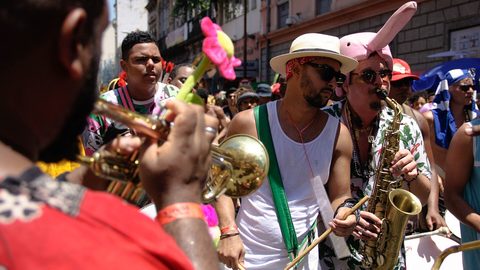 Brazil's Many Carnavals: Samba, the Northeast, and Music Beyond Rio
Brazil's real soundtrack lives in Salvador's blocos, Olinda's frevo streets, and the forró dancehalls of the northeast interior.
Brazil's Many Carnavals: Samba, the Northeast, and Music Beyond Rio
Brazil's real soundtrack lives in Salvador's blocos, Olinda's frevo streets, and the forró dancehalls of the northeast interior.
-
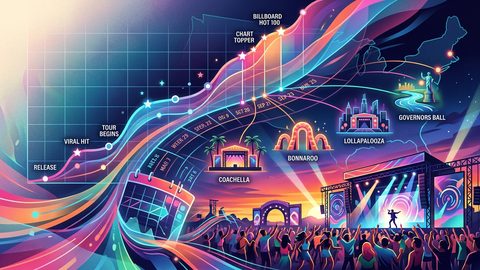 How an Artist's Chart Run Should Shape Your US Festival Calendar
Track an artist's chart momentum to predict US festival billing tiers and book tickets before prices and crowds outpace the experience.
How an Artist's Chart Run Should Shape Your US Festival Calendar
Track an artist's chart momentum to predict US festival billing tiers and book tickets before prices and crowds outpace the experience.