Keeping Festival Tickets and Travel Plans Available When the Signal Drops
Keep festival tickets, rail plans and room details ready offline, with practical battery tips, meeting points and late-night travel backups.
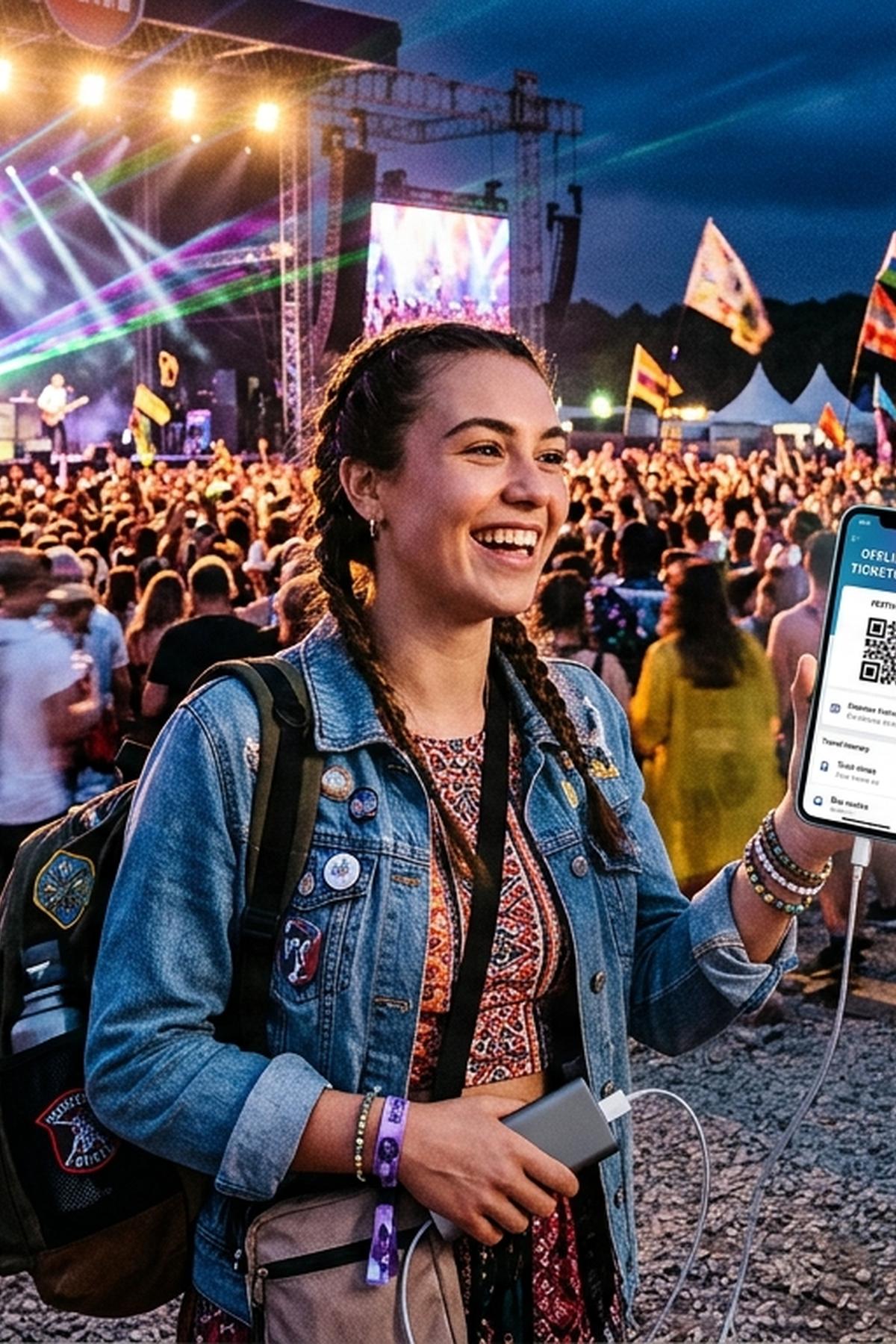
The bass is still rattling through your jacket when your phone stops loading. Your mate has disappeared towards another stage. Your ticket lives somewhere inside an app, and the train back to your room leaves after midnight. This is a miserable moment to learn which parts of your festival weekend need an internet connection. A little preparation before the first set can keep the music at the centre of the trip, instead of turning the exit queue into a technical support session.
Your way in and your way home should survive a lost signal.
- Save tickets in the format your festival or rail operator accepts, then test access offline.
- Keep battery capacity for entry, transport and getting into your accommodation.
- Agree on a physical meeting point and save a realistic route back after the final set.
Build a Ticket Backup That Will Actually Get You Inside
A screenshot feels reassuring. It takes seconds and sits neatly beside your photos. But having an image of a ticket does not mean you have a valid way through the gate. Some organisers accept static barcodes. Others require a ticket inside an approved wallet or account. Read the instructions for your festival edition before deciding what counts as a backup.
Roskilde makes the distinction clear. Its digital ticket rules for 2027 require digitally watermarked tickets displayed through a supported wallet or MyTickster account. Printed copies and screenshots do not grant entry. If several tickets remain in one account, those ticket holders must arrive together, or use the official transfer process beforehand.
That changes how a group should prepare. If one person is arriving after work and another wants to catch the opening act, sort out ticket ownership before travelling. Forwarding a picture in the group chat is not a substitute for an authorised transfer.
Where the organiser offers a wallet option, add the ticket while you have a reliable connection. Open it and check the event, date and ticket holder details. Keep the booking reference separately for support enquiries, but do not treat that reference as an entry pass. Carry any identification the organiser requires.
Run an Offline Rehearsal Before Leaving
- Complete any account login, ticket download or authorised transfer while connected.
- Open each accepted ticket and check that it belongs to the correct day and person.
- Switch your phone to flight mode, then try opening the ticket again through its intended app or wallet.
- If it fails, reconnect and consult the organiser’s instructions before setting off.
- Restore connectivity afterwards so you can receive travel updates and messages.
This rehearsal checks access on your device. It does not override the organiser’s rules or guarantee that a copied barcode will scan. Repeat it after changing phones, reinstalling an app or receiving a replacement ticket.
Check Venue Rules Before Packing Your Battery Backup
A power bank is useful only if you can bring it inside. Check the festival’s current entry rules for batteries, bag sizes and charging equipment. If a restriction is unclear, ask the organiser before travelling. Advice from last year’s crowd can help with atmosphere and footwear. It should not settle this year’s security policy.
Read the re-entry rules too. Leaving to fetch a charger from your room may mean missing more than one set, and your ticket may have conditions attached to returning. Check where wristbands are issued and whether your chosen entrance handles your ticket type.
Keep the entry essentials accessible. A phone buried beneath waterproofs and spare socks slows you down when the queue starts moving. Protect it from rain, and keep the charging cable somewhere dry. Before reaching the scanner, open the accepted ticket and adjust the screen brightness enough for it to be read.
Give Your Battery a Job Beyond Filming the Headliner
Your phone has several shifts to work. It gets you through the gate, helps you find friends, holds the train ticket and may control access to your room. Ten videos of the same chorus are competing with all of that.
Start with a charged phone and a charged power bank, if permitted. Test the cable beforehand. A cable that only works when bent against a bedside lamp is already retired, whether you have admitted it or not. Keep your phone out of direct sun and avoid leaving it charging inside a hot, tightly packed bag.
Use battery-saving mode before the percentage becomes alarming. Lower unnecessary screen brightness between checks and pause automatic photo uploads. Download travel documents over accommodation Wi-Fi before heading out. If you temporarily use flight mode to conserve power, agree when you will reconnect so friends know when to expect a reply.
A travel-data option can help with connected tasks. You might consider an eSIM when planning the trip, checking device compatibility and destination details before buying. Your entry ticket and route home should still be accessible without a working data connection.
Separate Your Rail Ticket From Your Rail Information
A saved journey and a valid ticket do different jobs. One tells you where you intended to go. The other proves your right to travel. Keep both available, and check the requirements of each operator involved in your route.
For a German festival journey, Deutsche Bahn’s rail ticket formats explain a useful distinction. An issued PDF online ticket can be presented digitally or printed. Some products, including the Deutschland-Ticket, are mobile-only, and printing a screenshot of a mobile ticket is not valid. Choose the backup your actual ticket permits.
Save your itinerary separately from the ticket. Include departure and arrival stations, train numbers, changes and the final connection towards your accommodation. Keep the original station names rather than relying on a translated label you might struggle to match on a departure board.
A timetable screenshot is a planning reference. It cannot show a platform change or cancellation that happens later. Check live information before leaving the festival when connectivity allows, then check station displays and announcements when you arrive. Ask railway staff if the route is unclear.
Save the Details That Matter After Midnight
Create one clearly named note for the return journey. Keep the information compact enough to read while tired and standing outside.
- The station name, a saved walking route and the entrance you intend to use.
- Your planned departure, service date and a later alternative if one is scheduled.
- Ticket restrictions and any seat reservation stored separately from the itinerary.
- Your accommodation address, reception number and late-arrival instructions.
- A fallback plan if you miss the final workable connection.
Watch the date carefully. A departure at 00:40 belongs to the next calendar day. Label it with both the date and the night you mean, for example, “Saturday night, departure Sunday at 00:40”. That small bit of clarity earns its place when your ears are ringing.
Choose Meeting Points You Can Find Without Messaging
“Near the sound desk” sounds precise until thousands of people decide to stand there. “By the food” is barely a plan. Pick a fixed landmark you can describe clearly, then visit it together before splitting up.
A signed information point or a clearly numbered entrance can work, provided standing there does not block access. Choose an exact side of the landmark. Avoid emergency routes and busy pinch points. Agree on a time, a waiting period and what happens after that period ends.
You also need a meeting point outside the festival. Friends may leave through different gates, or one person may decide to head back early. Save the external location on an offline map and check that everyone understands the walking route.
For example, agree to meet at a particular information sign 20 minutes after the final set you are attending. Decide whether the group then leaves together or follows separate saved routes. Send useful messages when a signal returns: location, time and intended next move. “Where are you?” gives nobody much to work with.
Book the Bed Around the Journey After the Music
The cheapest room can become an expensive decision if the last train leaves before the act you travelled to hear. Judge accommodation from the festival exit backwards. Work out how you will reach the room at the hour you expect to leave, with time for crowds, walking and possible queues.
For Roskilde, compare festival camping with a room in town and a Copenhagen base using the transport arrangements for your specific dates. A room beside a convenient daytime station is only useful if the late return works too. Check the final stretch from your arrival station to the front door, not merely the main rail connection.
Ask the property directly about late arrival. A booking confirmation does not tell you whether someone will answer a buzzer at 02:00. Establish the reception hours, key collection process and what happens if you arrive later than planned.
If entry depends on a code or an app, save the permitted instructions offline and check how access works without mobile data. Keep the property’s telephone number in your contacts and on paper. Store access codes privately rather than sharing them across a large festival chat.
If you expect to stay until the final track, budget for accommodation that supports that choice. Leaving early can be sensible. Making that decision at breakfast is much better than making it during the set you came for.
Make Missing the Last Connection an Inconvenience
A fallback does not need to be elaborate. It needs to be usable. Before the weekend, decide what you will do if the final connection becomes impossible. That might mean approved festival camping, a confirmed local room or a licensed taxi within your agreed budget.
Do not build the fallback around an unverified assumption that a station stays open overnight. Check access arrangements if waiting there forms part of your plan. Keep enough money available for an alternative journey, and discuss how shared costs will work before everyone is exhausted.
If disruption changes your journey, retain tickets, relevant notices and receipts. Check your operator’s instructions before buying replacement travel or accommodation. Do not assume every expense will be reimbursed. First establish a workable route or a confirmed place to stay.
Keep the Last Track as the Last Thing You Worry About
Before heading out, open your ticket, check your battery, confirm the meeting point and read the route back. Keep a small paper note with your accommodation address and a useful contact number. It weighs almost nothing and still works when the phone does not.
You have built the trip around a particular sound, crowd or room. Give the practical details a little attention while you are rested and connected. Then, when the signal disappears and the next act starts, you can put the phone away knowing your way in and your way home are already sorted.
Read next
-
 How to Plan a European Festival Circuit by Train Without Missing the Gigs
Build a three-city European festival circuit by train, with date-led routes, venue-focused stays and realistic plans for getting home after the last set.
-
 How an Artist's Chart Run Should Shape Your US Festival Calendar
Track an artist's chart momentum to predict US festival billing tiers and book tickets before prices and crowds outpace the experience.