Flights to New Orleans and the Southern Music Cities
How to book flights for a New Orleans, Memphis, and Nashville music trip, including open-jaw strategies, MSY ground transport, and the case for driving one leg.
Forget the Triangle: the Flight Problem Nobody Talks About
Most people planning a Southern music cities trip assume they will fly into one city, work their way across the other two, and fly home from the third. They imagine a neat triangle. The reality is messier. No single airline alliance connects New Orleans (MSY), Memphis (MEM), and Nashville (BNA) with cheap, direct flights between all three. The driving distances are punishing. New Orleans to Nashville by road is 533 miles. New Orleans to Memphis is 395 miles, a six hour slog up I-55 across Louisiana bayou country that turns into flat Mississippi farmland. Memphis to Nashville is 212 miles, three hours on I-40 over rolling Tennessee hills. That leg is the easy one. A one way rental car between New Orleans and Memphis is often more practical than a connecting flight, even with the drop fee. And the city you start in matters for your wallet.
Book an Open-Jaw Ticket, Not a Circle Trip
Do not book a round trip into one city and out of the same city. That forces you to drive back, wasting a full day and hundreds of dollars on gas and a hotel you do not need. Book a multi city or open-jaw ticket: fly into one city, out of another. Start in New Orleans and end in Nashville. Here is why. New Orleans is the most expensive city to fly into during peak season. February through May, when Mardi Gras (fare spikes 2x-4x) and Jazz Fest (1.5x-3x) hit, inbound MSY tickets are brutal. Nashville and Memphis have smaller spikes but lower baselines. Start in New Orleans and you absorb the peak fare on day one. End there and you pay the same peak fare on departure day, and you still have to get back to the airport. Fly into MSY, drive to Memphis, drive to Nashville, fly home from BNA. Your most expensive flight is the one that gets you to the party.
The catch is the one way rental car. Dropping a car at MEM or BNA after picking it up at MSY triggers a drop fee. At major agencies, the fee for dropping at MEM ran $100-$300. For BNA, $150-$350. That is real money. Compare it to the alternative: a connecting flight MSY to MEM. Average round trip fare between those two in low season is $180-$260. A one way flight is rarely much cheaper. You pay for a 90 minute flight that does not get you to your hotel, plus the rental car you still need in Memphis. The one way rental with the drop fee still wins for two or more people. One person solo? The flight might break even. Two or more? Drive.
What the Driving Actually Feels Like
The drive from New Orleans to Memphis is not scenic. I-55 crosses the Lake Pontchartrain Causeway, then runs straight across rural Mississippi for five hours. The last hour into Memphis crosses the Mississippi River bridge, which is dramatic. The rest is gas stations, billboards for strip clubs, and exits for nowhere. Do it in daylight. The drive from Memphis to Nashville is on I-40, three hours over forested hills, with a stop in Jackson, Tennessee for a mediocre rest area. The drive from Nashville back to New Orleans, if you made the mistake of booking a closed loop, is seven and a half hours. Do not do that.

_in_2025.01.jpg)
Your Arrival at MSY: the Terminal You Need to Know
Louis Armstrong New Orleans International Airport opened a new terminal on November 6, 2019. It has 35 gates and served 13.9 million passengers in 2024. Sixteen airlines operate here, flying nonstop to 57 destinations. The terminal is compact and efficient. Security lines move fast outside of festival surges. The problem is getting from the terminal to your hotel.
There is no direct rail link. The public bus is Route 202 Airport Express, costing $1.25 with exact change or the Le Pass app. It takes 40-50 minutes to reach Canal Street and drops you on Elk Place. That is not a block you want to drag luggage along after dark. Your real options are a taxi or a ride share. A taxi from MSY to the French Quarter or Central Business District is a flat $36 for one or two passengers. For three or more, it is $15 per extra passenger. A ride share off peak runs $36-$45. During a festival surge, that ride share can hit $60-$120. Book a taxi. It is cheaper for two people, predictable, and the queue is well organized.
Getting Around New Orleans Without Losing Your Mind
The streetcar is the romantic option. The St. Charles line is beautiful, but it runs on single track sections with terrible headway management. You will wait 20 minutes, see nothing, then three cars arrive at once. The RTA bus network is more practical for cross town trips but requires the Le Pass app for digital tickets. A single ride is $1.25. A one day pass is $3. A three day pass is $8. Carry exact change as backup. The Le Pass app is buggy. Download offline maps before you arrive. GPS signal is unreliable in the dense French Quarter canyons. Do not rely on your phone for navigation around Jackson Square.
Walk the French Quarter. It has a walk score of 97. But the sidewalks are broken, tilted, and potholed. You can twist an ankle on Royal Street as easily as on Bourbon. Street flooding after a heavy downpour leaves intersections impassable for hours. Rain comes suddenly. Pack shoes you can get wet and that have traction.
| Routing | Distance Driven | Drive Time | Key Cost Factor |
|---|---|---|---|
| MSY to MEM (one-way rental) | 395 miles | 6 hours | $100-$300 drop fee + $45-$75/day rental |
| MEM to BNA (one-way rental) | 212 miles | 3 hours | $150-$350 drop fee + $45-$75/day rental |
| MSY to BNA direct flight | 533 miles (not driven) | 1.5 hours flight | $200-$300 one-way fare; no car |
| Closed loop: MSY-MEM-BNA-MSY | 1,140 miles total | 16.5 hours driving | Wasted day; hotel night; gas |
| Open jaw: MSY in, BNA out | 607 miles total | 9 hours driving | Drop fee on one car; cheaper flights |


The Honest Reality of New Orleans as Your Anchor City
New Orleans is not a relaxing destination. It is humid, hedonistic, and deeply sensory. The streets smell of sweet decay and stale beer. The party is relentless. The noise on Bourbon Street by late morning is a wall of sound and the smell of vomit is overpowering. Aggressive panhandlers work the blocks just off Bourbon with the "I bet I know where you got your shoes" scam. The visible poverty and inequality hit hard in the heat. This city is best for music obsessives chasing live brass bands and bounce in their natural habitat, for serious eaters who plan entire days around specific meals, and for nightlife seekers who can party past 4 a.m. It is not for people who need quiet, cleanliness, or order. It is punishing for anyone with significant mobility issues. The historic infrastructure is broken. Public restrooms are nearly nonexistent. Buy something to use a business's facilities.
Plan for four full days in New Orleans. Less forces you to choose between food, music, and neighborhoods, and you will end up with only a superficial Bourbon Street hangover. The city's magic is nocturnal, lubricated, and serendipitous. Do not try to do New Orleans on a rigid early morning schedule. The 10 p.m. to 2 a.m. music window on Frenchmen Street is where the real thing happens. Frenchmen Street has three blocks of live music clubs with no cover charges. Preservation Hall has traditional jazz. Book ahead or queue early. The Sazerac House is a free cocktail history museum with a tasting included. Give it 45 minutes.
When to Go and When to Run
February through May is peak season. Mardi Gras and Jazz Fest drive hotel rates to $380-$550 per night. The average hotel daily rate in New Orleans for 2024 was $195. September is the lowest fare month for flights, but late July through early September is the avoid window. The heat and humidity are dangerous. It is the core of Atlantic hurricane season, bringing real risk of trip disrupting storms and street flooding. October is a secondary peak for Halloween and pleasant weather. If you come during Mardi Gras, know that the Saturday before Mardi Gras (Endymion parade) gridlocks the entire city. Do not try to drive anywhere that day.
Common Questions
Should I book a round-trip flight to New Orleans and drive to Memphis and Nashville from there?
No. That creates a 16.5 hour return drive from Nashville back to New Orleans. Book an open-jaw ticket that flies into one city and out of another. The most cost-efficient routing is into MSY and out of BNA.
Is it cheaper to fly or drive between New Orleans and Memphis?
For two or more people, a one-way rental car with the drop fee beats buying a one-way flight per person. The average round-trip fare MSY-MEM in low season was $180-$260 in 2024. A one way flight is rarely less than $100. The drop fee runs $100-$300. A compact rental off peak is $45-$75 per day. Two people splitting the car and fee beat two flights.
What is the best way to get from MSY airport to the French Quarter?
A taxi. The flat rate is $36 for one or two passengers. For three or more, add $15 per extra passenger. Ride shares off peak run $36-$45 but surge to $60-$120 during festivals. The airport express bus costs $1.25 but takes 40-50 minutes and drops you on Elk Place, which is not safe or convenient with luggage.
How many days do I need in New Orleans on this trip?
Four full days minimum. Anything less forces you to choose between the essential food, music, and neighbourhood exploration. You will end up with only Bourbon Street and a hangover. The city rewards slow, nocturnal pacing.
When should I avoid flying into New Orleans?
Late July through early September. The heat is oppressive, and it is the core of Atlantic hurricane season. February through May is peak season with high hotel and flight prices, but the risk is crowds and cost, not cancellations. The lowest fare month for MSY is September, but that is the most dangerous weather window.
Read next
-

 New Orleans Hotels The Historic Boutique and Festival Premium
New Orleans historic and boutique hotels from the Monteleone to the Pontchartrain, and what Jazz Fest minimum stays and surge pricing do to the bill.
New Orleans Hotels The Historic Boutique and Festival Premium
New Orleans historic and boutique hotels from the Monteleone to the Pontchartrain, and what Jazz Fest minimum stays and surge pricing do to the bill.
-
 Where to Stay in New Orleans by How Late You Plan to Be Out
Choose your New Orleans neighborhood by your bedtime: French Quarter for 4 a.m. chaos, Marigny for the Frenchmen Street stagger, CBD for midnight quiet.
Where to Stay in New Orleans by How Late You Plan to Be Out
Choose your New Orleans neighborhood by your bedtime: French Quarter for 4 a.m. chaos, Marigny for the Frenchmen Street stagger, CBD for midnight quiet.
-
 New Orleans Beyond the Music What to Do Between the Nights
Daytime New Orleans for the music traveller who sleeps late: shaded sculpture gardens, powerful Bywater murals, and streetcar rides through the Garden District.
New Orleans Beyond the Music What to Do Between the Nights
Daytime New Orleans for the music traveller who sleeps late: shaded sculpture gardens, powerful Bywater murals, and streetcar rides through the Garden District.
-
 The New Orleans Calendar Mardi Gras Jazz Fest and the Summer Slump
-
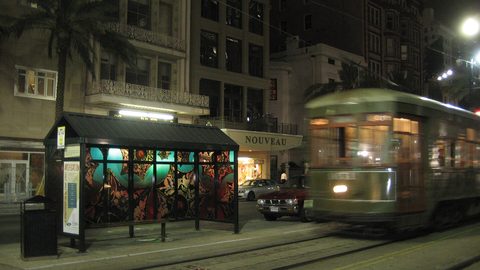 Getting Around New Orleans at Night Without a Car
How to get around New Orleans after midnight when streetcars stop, ride-share prices spike at 2 a.m., and the sidewalks are your fastest—and most hazardous—option.
Getting Around New Orleans at Night Without a Car
How to get around New Orleans after midnight when streetcars stop, ride-share prices spike at 2 a.m., and the sidewalks are your fastest—and most hazardous—option.
-
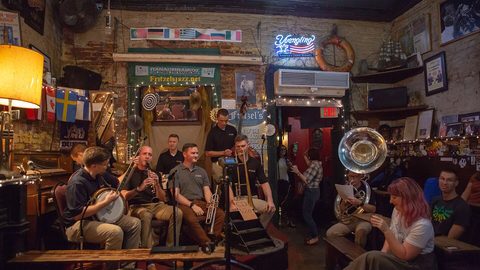 Three and Five Nights in New Orleans Built Around the Music
A music-first itinerary for 3 or 5 nights in New Orleans that respects the city's late-night rhythm, with recovery mornings and a dedicated brass band night built in.
Three and Five Nights in New Orleans Built Around the Music
A music-first itinerary for 3 or 5 nights in New Orleans that respects the city's late-night rhythm, with recovery mornings and a dedicated brass band night built in.
-
 Music America Road Trip: Where the Sound Comes From and How to Drive It
Map your cross-country music pilgrimage by car, linking the Mississippi Delta, Appalachia, and the Rust Belt into one continuous American soundtrack.
Music America Road Trip: Where the Sound Comes From and How to Drive It
Map your cross-country music pilgrimage by car, linking the Mississippi Delta, Appalachia, and the Rust Belt into one continuous American soundtrack.
-
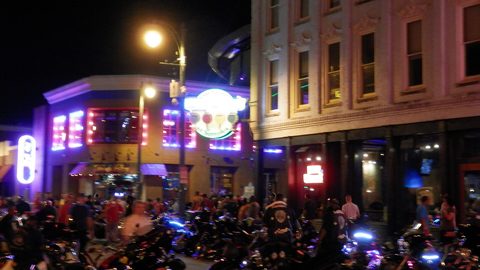 New Orleans or Memphis Which American Music City Should You Visit First
New Orleans offers denser, more serendipitous live music and later nights; Memphis is cheaper, more compact, and historically deeper for blues and soul.
New Orleans or Memphis Which American Music City Should You Visit First
New Orleans offers denser, more serendipitous live music and later nights; Memphis is cheaper, more compact, and historically deeper for blues and soul.
-
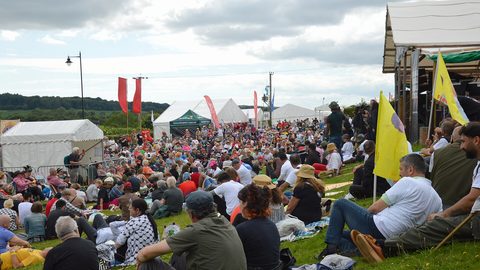 New Orleans Jazz Fest or an Ordinary Music Week The Trade Nobody Tells You
Jazz Fest brings legendary lineups but packed clubs and surge pricing; an ordinary week offers breathing room, lower costs, and the same local bands.
New Orleans Jazz Fest or an Ordinary Music Week The Trade Nobody Tells You
Jazz Fest brings legendary lineups but packed clubs and surge pricing; an ordinary week offers breathing room, lower costs, and the same local bands.