A Music-First Approach to Choosing Your Next City
How to plan an entire trip around live music, from picking the right city and the right week to knowing which room delivers the real sound.


Reverse-Engineering Your Trip from the Sound, Not the City
The single most useful fact about planning a music trip is also the one most music travellers get backwards: the famous room matters less than the night you pick. Preservation Hall will not save a Tuesday in August when the second-line band is on a break and the audience is eight hungover tourists. Frenchmen Street’s clubs run 100 to 300 capacity, and every one of them has a Tuesday that sounds exactly like every other Tuesday. What you need is a reverse-engineering method: start with the sound you want to hear, then work backwards to the city, the week, and the venue that delivers it. Stop choosing cities. Start choosing dates.
A trip built around live music is a trip that accepts tradeoffs. You trade a comfortable 9 p.m. dinner for a 1 a.m. set. You trade a clean sidewalk for the chance to hear a brass band blow the doors off a corner bar. You trade predictability for the thing that makes live music live: the knowledge that this specific combination of musicians, crowd, and humidity will never happen again. The framework that follows helps you make those trades intentionally. New Orleans is the worked example. The method applies to Memphis, Nashville, Kingston, Salvador, and Lisbon with only minor substitutions.
- Best For: Music obsessives chasing jazz, brass bands, and bounce. Serious eaters. Nightlife seekers who can party past 4 a.m. History and architecture buffs interested in Creole culture. Group travellers celebrating a milestone.
- Not For: People who need quiet, cleanliness, and order. Anyone with significant mobility issues. Families with young children expecting Disney-style entertainment. Travellers on a very tight budget.
- Minimum Days: 4 full days. Less forces a choice between essential food, music, and neighbourhood exploration.
- Peak Season: February through May. Mardi Gras (date varies, usually February) and Jazz & Heritage Festival (late April early May) drive peak pricing. October is a secondary peak.
- Avoid Window: Late July through early September. Oppressive heat and humidity, core of Atlantic hurricane season. Avoid the Saturday before Mardi Gras unless attending Endymion.
- Arrival: Louis Armstrong New Orleans International Airport (MSY). Taxi or ride share to French Quarter or CBD takes 25 to 40 minutes. Taxi costs a fixed $36 for 1 2 passengers. Ride share costs $30 to $45. No direct rail link. Public bus (Route 202 Airport Express) costs $1.50 but takes over an hour.
- Getting Around: Streetcar is the dominant tourist mode. RTA bus network is more practical for cross town trips. Use the Le Pass app for digital tickets ($1.25/ride, $3 day pass). Cash requires exact change. The St. Charles line has single track sections causing irregular arrivals.
- Common Mistake: Trying to do New Orleans on a rigid early morning schedule. The city's magic is nocturnal, lubricated, and serendipitous. Over planning daytime activities while ignoring the 10 p.m. to 2 a.m. music window means missing the point.
Step One: Reverse Engineer from the Sound, Not the City
You pick a city because it has a reputation for music. That is the mistake. You should pick a date because a specific sound is alive and well in a specific place at that moment. The framework has two inputs: genre and venue type. Scene timing is the third, and it is the one that determines everything else.
Match Genre to Calendar
Start with genre. If you want traditional New Orleans jazz, the sound that Preservation Hall and the brass bands play, the low season is January through February and August through September. That is when local club gigs are thin. The high season is February through May, when Mardi Gras and Jazz Fest pull every working musician into the rotation. If you want bounce or brass band funk at full intensity, you need a celebration weekend.
Apply the Logic Elsewhere
Now run the same logic through other cities. Memphis for blues and soul peaks in May during the Beale Street Music Festival. Nashville for country and Americana songwriters rounds runs strongest in June during CMA Fest. Kingston for reggae and dancehall peaks in August for Reggae Sumfest. Salvador for samba reggae and axé peaks in February during Carnival. Lisbon for fado peaks in June during the Santos Populares celebrations. In every case, the tourist board will tell you the city is always musical. That is a lie. The music scene has a heartbeat. Arrive when it pulses.
Step Two: Choose the Week That Matches the Scene Density
Once you know the genre, you pick the week. This is where New Orleans teaches the hardest lesson. The difference between a Tuesday in August and a Friday during Jazz Fest is not just the temperature. It is the density of working musicians on the street. In August, a Frenchmen Street club might have one band playing a desultory set to a dozen people. During Jazz Fest, every club on the strip runs two sets a night, the cover charge jumps from $10-$30 to $25-$50, and the audience includes the musicians who just finished their own sets on the Fair Grounds stage.
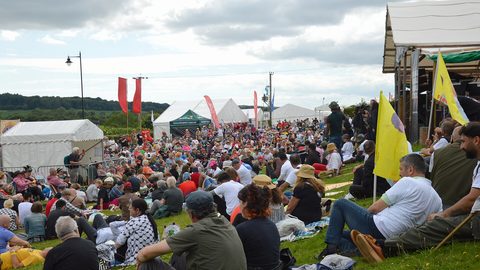
The 2025 Jazz Fest single day advance ticket price was $95, rising to $105 at the gate, with weekend passes at $210 to $240, published by the New Orleans Jazz and Heritage Foundation. French Quarter Festival costs zero and falls in the second or third weekend of April. Both events create a music ecosystem where the after shows matter more than the main stage. Book the week that contains the celebration, then ignore the celebration for the clubs. You get the full density without the field mud.
Density Windows in Five Other Cities
For Nashville, CMA Fest week in early June turns every Broadway bar into a label showcase. For Memphis, the week of the Beale Street Music Festival in early May concentrates the city's soul and blues talent into a five day window. For Salvador, Carnival week in February means the city's trios elétricos roll through every neighbourhood, but the real sound is in the ensaios, the rehearsal parties that happen in the weeks before. For Lisbon, the June festival of Santo António floods the Alfama district with fado performances in tiny tascas that never have covers the rest of the year.
Step Three: Match the Venue Type to Your Tolerance for Friction
A famous room is a room. A room with the right band on the right night is an experience. The difference is a matter of capacity, sound pressure, and audience behaviour.
Frenchmen Street Rules
On Frenchmen Street, the small venue holds 100 to 300 people. Set length runs 45 to 90 minutes. Every club enforces a one drink minimum per set. The audience expects full silence during the performance. Phone use is prohibited. Sound pressure levels at an indoor club show run 95 to 110 dBA. You need hearing protection rated at 15 to 25 dB NRR for those rooms. At an outdoor main stage, the sound hits 100 to 115 dBA at the front barrier, requiring 20 to 30 dB NRR protection. Pack earplugs before you pack any instrument.
Flying with an Instrument
If you are carrying an instrument, the airline policy is straightforward: a hard case counts as one checked bag, fees run $30 to $150 depending on the airline. A cabin instrument must fit in an overhead bin, maximum length 22 to 24 inches. If your instrument contains Brazilian rosewood (Dalbergia nigra), which is CITES Appendix I listed, you need a non commercial musical instrument certificate valid for three years for international travel. This matters for any vintage guitar or woodwind crossing from the US to Cuba, Brazil, or Europe. Do not assume customs will wave it through.
Venue Choices Across Cities
For Memphis, the choice is between Beale Street's tourist gauntlet and the hushed soul of the Royal Studios. For Nashville, it is the Broadway honky tonks where the cover is zero and the crowd is drunk by 3 p.m. versus the Bluebird Cafe where the audience listens in silence and the songwriters play two hour rounds. For Kingston, it is the outdoor dancehall sessions on the waterfront against the studio sessions at Tuff Gong where Bob Marley recorded. For Salvador, it is the Pelourinho square where the drum groups perform for tourists or the ensaios in the suburbs where the real samba reggae happens. For Lisbon, it is the Fado houses in the Bairro Alto where the performance is theatrical versus the tascas in Alfama where the singer is a neighbour.
Step Four: Build the Itinerary Around the Music Hours, Not the Museum Hours
The common mistake in New Orleans is trying to do the city on a rigid early morning schedule. The music window is 10 p.m. to 2 a.m. If you are asleep by 11 p.m., you are missing the point. The same applies to every city in this framework. Nashville's songwriters rounds run late into the night. Memphis's blues clubs hit their stride after midnight. Lisbon's fado houses serve dinner at 10 p.m. and the singer does not start until 11 p.m. Kingston's dancehall sessions start at midnight and run until dawn. Salvador's Carnival street parties run all night.
Sleep Strategy
So you build the day around the night. Sleep until 10 a.m. Eat a late breakfast. Spend the afternoon on one thing only: one neighbourhood walk, one museum, one meal. Then rest. The afternoon nap is not a vacation failure. It is the precondition for a 2 a.m. brass band set. If you try to cram in six landmarks before sunset, you will be exhausted by the time the music starts, and you will sit in the back of a dark room checking your watch. That is not a music trip. That is a checklist trip with a soundtrack.
What’s Worth Your Afternoon
For New Orleans, the landmarks that reward a short visit are St. Louis Cathedral (free entry, five minute walk through), Jackson Square (street artists and fortune tellers, no time commitment), and the Sazerac House (free cocktail history museum with a tasting included). The National WWII Museum needs four hours and a booked ticket. Skip it on a music trip. Save it for a return visit. City Park is larger than Central Park and the sculpture garden is worth an hour, but do not try to see all of it. The Backstreet Cultural Museum in Tremé, which holds Mardi Gras Indian suits, is deeply authentic and takes 45 minutes. Studio Be in Bywater, which contains massive Black social justice murals, takes 30 minutes. Vue Orleans, the indoor/outdoor observation deck, requires a ticket and is skippable if you are on a tight schedule.
The Geography of a Music Trip: Where to Stay and How to Move
Pick Your Base by the Beat
Accommodation zone flows from the celebration. For Jazz Fest at the Fair Grounds, the nearest zones are Mid-City, Bayou St. John, and Gentilly. For French Quarter Festival, stay in the French Quarter, Marigny, or CBD. The Marigny is the practical choice: it sits between the French Quarter and Frenchmen Street, giving you a walkable route to both the clubs and the historic core. The Bywater is cheaper but requires a longer walk or a ride share to reach the music strip. The Garden District is beautiful but dead after dark, and you will spend $15 each way on ride shares to reach the clubs.
Transit Reality
Getting around is a test of patience. The streetcar is the dominant tourist transport, but the St. Charles line has single track sections that cause irregular arrivals. The RTA bus network is more practical for cross town trips. Download the Le Pass app for digital tickets: $1.25 per ride, $3 for a day pass. Cash on board requires exact change and no transfers. The biggest visitor trip up is waiting for a streetcar that never comes, then seeing three arrive at once. Have a ride share backup. The last RTA bus from the Fair Grounds to downtown on Jazz Fest nights runs approximately 19:00 to 20:00, which means you will almost certainly be leaving before the headliner finishes if you rely on public transit. The ride share wait leaving Jazz Fest at close is 45 to 90 minutes with a surge multiplier of 2.5x to 4.0x. The solution: walk away from the Fair Grounds for six blocks, then call the ride share from a side street. The surge drops by half.


| Festival | Typical Week | Admission | Nearest Stay Zone | Club Cover During Festival |
|---|---|---|---|---|
| Jazz & Heritage Festival | Last weekend of April through first weekend of May | $95 advance (2025), $105 gate | Mid-City, Bayou St. John, Gentilly | $25-$50 (up from $10-$30) |
| French Quarter Festival | Second or third weekend of April | Free | French Quarter, Marigny, CBD | $10-$30 (normal) |
| CMA Fest (Nashville) | Early June | $130+ for 4-day pass | Downtown, Music Row | Zero cover on Broadway, $50+ for songwriters rounds |
| Beale Street Music Festival (Memphis) | Early May | $85 single day (2024) | Downtown, South Main | Free to $20 on Beale Street |
| Reggae Sumfest (Kingston) | Mid August | $150+ for pass | New Kingston, Half Way Tree | Free to $30 street dances |
| Carnival (Salvador) | February (varies) | Free street, $500+ for camarote | Pelourinho, Barra, Ondina | Free ensaios, $50+ blocos |
| Festas de Lisboa (Santo António) | June 12-13 | Free street parties | Alfama, Bairro Alto, Chiado | Zero cover in tascas |
The Friction You Pay for the Sound
New Orleans is not an easy city. The potholes and broken sidewalks are severe enough to twist an ankle, even in the French Quarter. The smell of urine, vomit, and stale beer on Bourbon Street is overpowering by late morning. Aggressive street hustlers target tourists with the 'I bet I know where you got your shoes' scam. Public restrooms are almost non-existent; you must buy something to use a business's facilities. Street flooding after a sudden heavy downpour can leave intersections impassable for hours. The city is a humid, hedonistic, deeply sensory place that feels more Caribbean than American, where the streets smell faintly of sweet decay and the party is relentless. Visitors are surprised by the sheer physical exhaustion of navigating broken sidewalks, the aggressive panhandling just steps off Bourbon Street, and the emotional weight of visible poverty in the heat.
This is the tradeoff. You do not come here for order. You come here because the music is live, the food is specific, and the night has no curfew. The same principle applies to every city on this list. Memphis has the poverty of the Delta visible from every downtown street corner. Nashville has the bachelorette party crowds that make Broadway a frat house on weekends. Kingston has safety concerns that require you to move through the city with intention, not aimlessness. Salvador has the heat and the hawkers who will not leave you alone on the Pelourinho steps. Lisbon has the steep hills that will punish a night of drinking port. The friction is part of the experience. If you want a clean, quiet, predictable vacation, pick a beach resort. If you want live music, pick a city that is alive, which means it is also messy.
What to Eat, What to Drink, and When to Do Both
Music trips run on a different eating schedule. Do not book a 7 p.m. dinner on a night you plan to hear music. You will be rushing the meal to make the 9 p.m. set, and the set will be the warm up band. Eat at 5 p.m. or 11 p.m. The 5 p.m. dinner lets you settle the check, walk to the club, and be in your seat by 7:30. The 11 p.m. dinner, after the first set, lets you eat on the late night menu when the crowds are thin. The middle ground is a mistake.
The Short List
In New Orleans, the essential food list is short enough to memorise. Café du Monde for beignets and café au lait, open air, any hour. Felix's on Bourbon Street for oysters chargrilled or raw, standing only. Parkway Bakery for a debris smothered roast beef po boy, dressed. Mr. B's for gumbo ya ya, the dark roux chicken and andouille stew. Central Grocery for a muffuletta, the cold cut olive salad sandwich. Red beans and rice on a Monday, the traditional washday meal. The Sazerac Bar for a Ramos Gin Fizz, the labour intensive frothy cocktail. Boiled crawfish in season, roughly January through June, from a corner seafood market. Do not add more than one of these to a single day. Each meal is a half day project. Rushing through two famous meals in one afternoon is a way to enjoy neither.
Read next
-
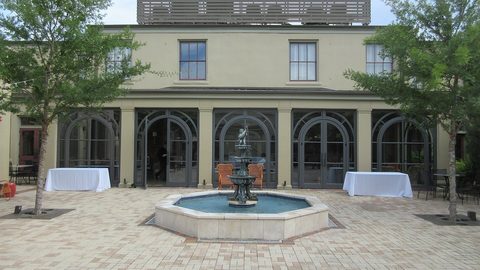
 New Orleans Hotels The Historic Boutique and Festival Premium
New Orleans historic and boutique hotels from the Monteleone to the Pontchartrain, and what Jazz Fest minimum stays and surge pricing do to the bill.
New Orleans Hotels The Historic Boutique and Festival Premium
New Orleans historic and boutique hotels from the Monteleone to the Pontchartrain, and what Jazz Fest minimum stays and surge pricing do to the bill.
-
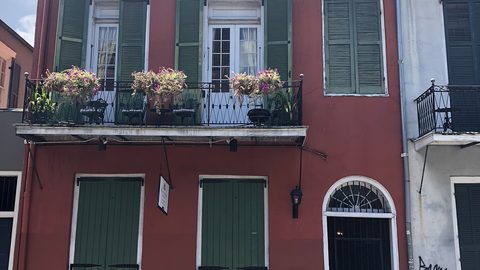 Where to Stay in New Orleans by How Late You Plan to Be Out
Choose your New Orleans neighborhood by your bedtime: French Quarter for 4 a.m. chaos, Marigny for the Frenchmen Street stagger, CBD for midnight quiet.
Where to Stay in New Orleans by How Late You Plan to Be Out
Choose your New Orleans neighborhood by your bedtime: French Quarter for 4 a.m. chaos, Marigny for the Frenchmen Street stagger, CBD for midnight quiet.
-
 Flying into New Orleans Memphis and Nashville for a Music Triangle Trip
How to book flights for a New Orleans, Memphis, and Nashville music trip, including open-jaw strategies, MSY ground transport, and the case for driving one leg.
Flying into New Orleans Memphis and Nashville for a Music Triangle Trip
How to book flights for a New Orleans, Memphis, and Nashville music trip, including open-jaw strategies, MSY ground transport, and the case for driving one leg.
-
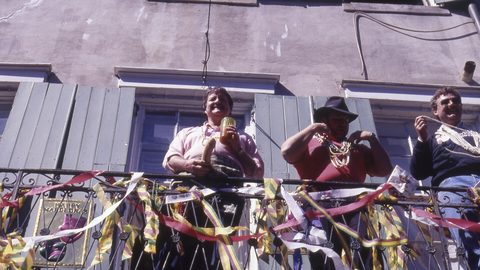 New Orleans Beyond the Music What to Do Between the Nights
Daytime New Orleans for the music traveller who sleeps late: shaded sculpture gardens, powerful Bywater murals, and streetcar rides through the Garden District.
New Orleans Beyond the Music What to Do Between the Nights
Daytime New Orleans for the music traveller who sleeps late: shaded sculpture gardens, powerful Bywater murals, and streetcar rides through the Garden District.
-
 The New Orleans Calendar Mardi Gras Jazz Fest and the Summer Slump
-
 Getting Around New Orleans at Night Without a Car
How to get around New Orleans after midnight when streetcars stop, ride-share prices spike at 2 a.m., and the sidewalks are your fastest—and most hazardous—option.
Getting Around New Orleans at Night Without a Car
How to get around New Orleans after midnight when streetcars stop, ride-share prices spike at 2 a.m., and the sidewalks are your fastest—and most hazardous—option.
-
 Music America Road Trip: Where the Sound Comes From and How to Drive It
Map your cross-country music pilgrimage by car, linking the Mississippi Delta, Appalachia, and the Rust Belt into one continuous American soundtrack.
Music America Road Trip: Where the Sound Comes From and How to Drive It
Map your cross-country music pilgrimage by car, linking the Mississippi Delta, Appalachia, and the Rust Belt into one continuous American soundtrack.
-
 New Orleans or Memphis Which American Music City Should You Visit First
New Orleans offers denser, more serendipitous live music and later nights; Memphis is cheaper, more compact, and historically deeper for blues and soul.
New Orleans or Memphis Which American Music City Should You Visit First
New Orleans offers denser, more serendipitous live music and later nights; Memphis is cheaper, more compact, and historically deeper for blues and soul.
-
 New Orleans Jazz Fest or an Ordinary Music Week The Trade Nobody Tells You
Jazz Fest brings legendary lineups but packed clubs and surge pricing; an ordinary week offers breathing room, lower costs, and the same local bands.
New Orleans Jazz Fest or an Ordinary Music Week The Trade Nobody Tells You
Jazz Fest brings legendary lineups but packed clubs and surge pricing; an ordinary week offers breathing room, lower costs, and the same local bands.