Hearing Protection for Live Music in New Orleans Clubs and Festivals
New Orleans musicians wear high-fidelity earplugs from Etymotic and Loop to survive brass band sets and all-day festivals without sacrificing sound quality.

.jpeg)
You Need 15 DB Filtered Earplugs for Any New Orleans Music Venue
Sound levels on the dancefloor of a Frenchmen Street club run 95 to 110 dBA. At a Jazz Fest main stage near the barrier, they hit 105 to 120 dBA. At those levels, OSHA lets you stay two hours at 100 dBA and just 15 minutes at 115 dBA without protection. NIOSH recommends zero unprotected minutes above 100 dBA. The foam plugs sold at d.b.a. and other bars for a dollar knock off 22 to 33 dB but kill the treble and leave you hearing mud. Musicians' plugs with flat-response filters cost more and preserve the tonal balance. You need them. Here are the three models actual New Orleans musicians rely on and why.
Three Musician-Tested Earplugs for New Orleans Venues
Etymotic ER20XS: The Brass Band Standard
Etymotic invented the flat-attenuation earplug for musicians. The ER20XS has a 20 dB Noise Reduction Rating and drops volume evenly across frequencies. Brass band tuba players at d.b.a. and The Spotted Cat use them because the low end does not overwhelm and the cymbals do not hiss. Cost is about $25 at local music stores or online. They come with three pairs of silicone tips. Fit them deep and twist until the canal is sealed. If the seal breaks during a two-hour set, the protection drops to near zero. Carry a backup pair.
Loop Experience (Plus): The Frenchmen Street Favorite
Loop Experience plugs reduce by 18 dB. The Plus variant adds a foam insert that takes it to 23 dB. The plastic loop handle makes insertion and removal fast between songs. That matters when you are hopping between three clubs on Frenchmen in a single night. Musicians like that the Loop sits flush enough to sleep with for post-set naps but stays visible so a sound engineer knows you are protecting and not ignoring. The standard 18 dB version costs about $35. The Plus add-on is $13. Do not buy the Loop Quiet model (27 dB) for live music. It is too strong and sounds like you are underwater.
Eargasm High Fidelity: The Jazz Fest Workhorse
Eargasm uses a 16 dB filter. The aluminum casing does not soften in the New Orleans humidity the way silicone sometimes does. The plugs come with a small metal carrying case that clips to your bag strap. At Jazz Fest, where you are outside for eight to ten hours across multiple stages, the 16 dB reduction keeps the main stage listenable but does not muffle conversation for buying a crawfish bread. Cost is about $40. One warning: the fit is narrower than Etymotic. If you have large ear canals, try Etymotic first.
When to Upgrade to Custom Moulded Plugs
Custom-moulded musicians plugs cost $150 to $300 for the impressions and basic filters. Premium electronic models run $300 to $1,000. An audiologist takes a silicone impression of your ear canal, sends it to a lab, and you wait two weeks. For a three-day trip, that is overkill. Buy Etymotic or Loop before you leave and test the fit at home. If you play in a weekly brass band gig in New Orleans, custom plugs are the right long term move. For a visitor, they are not worth the logistics.
What About Kids and Infants at Festivals or Clubs?
Children need a minimum 22 dB Noise Reduction Rating. Infant ear defenders (ages 3 months to 3 years) provide 22 to 31 dB. Children's models (3 to 16 years) offer 22 to 27 dB. Taking a child to any amplified music venue in New Orleans? Put defenders on them before you enter. A single two-hour unprotected exposure at 100 dBA can cause permanent threshold shift. The sounds of the crowd leaving and the streetcar clanging are not the problem. The subwoofer two feet from your kid is.
| Model | NRR | Filter Type | Best For | Cost |
|---|---|---|---|---|
| Etymotic ER20XS | 20 dB | Flat (linear) | Brass bands, clubs, Preservation Hall | $25 |
| Loop Experience (Plus) | 18 dB (23 with foam insert) | Flat (linear) | Multiple venue hopping, Frenchmen Street | $35 ($48 with Plus) |
| Eargasm High Fidelity | 16 dB | Flat (linear) | All-day festival use, Jazz Fest | $40 |
| Foam bar plugs (standard) | 22-33 dB | Strong high-frequency cut | Emergencies only | $1-$3 |


Venue Etiquette: Why Wearing Plugs Signals You Are Serious
New Orleans musicians learn early that tinnitus can start within weeks of regular unprotected club exposure. They watch the crowd. When you put in musicians' plugs before a set, you are telling the band you care enough about the sound to keep your ears working for the next song. Shove in foam plugs that wreck the mix and the band sees a tourist who does not know the difference. At Preservation Hall, where the room is small and the brass presses against your chest at 100 dB, the lack of plugs is physically painful by the end of a 45-minute set. Wear them.
If you forget yours, most bars on Frenchmen Street sell foam plugs. Do not use them for more than one song if you can help it. Walk two blocks to a drugstore on Decatur and buy a $12 pair of silicone swimmers plugs as a stopgap. They sound terrible too but fit better than foam. The real answer is to order Etymotic or Loop before you leave home. Test them with music at 80 dB on headphones. Arrange them so insertion takes three seconds. Then you are ready for d.b.a. at 1 a.m. for the Rebirth Brass Band set. You will still hear every note.
Who Needs Filtered Earplugs in New Orleans and Who Can Skip Them
Filtered earplugs in New Orleans are for music obsessives chasing jazz and brass bands in their natural habitat. If you plan multiple nights on Frenchmen Street, Jazz Fest, or any Preservation Hall set, musicians' plugs are not optional. They are as necessary as water and an umbrella. They are not for someone attending one ticketed concert in a seated venue, or visiting the city for food and architecture only. Foam plugs available at the venue bar destroy the sound. If that sounds fine to you, you do not need filtered plugs. But if you want to hear Rebirth Brass Band with clarity and still wake up without ringing ears, spend the $25.
Read next
-
 New Orleans Hotels The Historic Boutique and Festival Premium
New Orleans historic and boutique hotels from the Monteleone to the Pontchartrain, and what Jazz Fest minimum stays and surge pricing do to the bill.
New Orleans Hotels The Historic Boutique and Festival Premium
New Orleans historic and boutique hotels from the Monteleone to the Pontchartrain, and what Jazz Fest minimum stays and surge pricing do to the bill.
-
 Where to Stay in New Orleans by How Late You Plan to Be Out
Choose your New Orleans neighborhood by your bedtime: French Quarter for 4 a.m. chaos, Marigny for the Frenchmen Street stagger, CBD for midnight quiet.
Where to Stay in New Orleans by How Late You Plan to Be Out
Choose your New Orleans neighborhood by your bedtime: French Quarter for 4 a.m. chaos, Marigny for the Frenchmen Street stagger, CBD for midnight quiet.
-
 Flying into New Orleans Memphis and Nashville for a Music Triangle Trip
How to book flights for a New Orleans, Memphis, and Nashville music trip, including open-jaw strategies, MSY ground transport, and the case for driving one leg.
Flying into New Orleans Memphis and Nashville for a Music Triangle Trip
How to book flights for a New Orleans, Memphis, and Nashville music trip, including open-jaw strategies, MSY ground transport, and the case for driving one leg.
-
 New Orleans Beyond the Music What to Do Between the Nights
Daytime New Orleans for the music traveller who sleeps late: shaded sculpture gardens, powerful Bywater murals, and streetcar rides through the Garden District.
New Orleans Beyond the Music What to Do Between the Nights
Daytime New Orleans for the music traveller who sleeps late: shaded sculpture gardens, powerful Bywater murals, and streetcar rides through the Garden District.
-
 The New Orleans Calendar Mardi Gras Jazz Fest and the Summer Slump
-
 Getting Around New Orleans at Night Without a Car
How to get around New Orleans after midnight when streetcars stop, ride-share prices spike at 2 a.m., and the sidewalks are your fastest—and most hazardous—option.
Getting Around New Orleans at Night Without a Car
How to get around New Orleans after midnight when streetcars stop, ride-share prices spike at 2 a.m., and the sidewalks are your fastest—and most hazardous—option.
-
 Music America Road Trip: Where the Sound Comes From and How to Drive It
Map your cross-country music pilgrimage by car, linking the Mississippi Delta, Appalachia, and the Rust Belt into one continuous American soundtrack.
Music America Road Trip: Where the Sound Comes From and How to Drive It
Map your cross-country music pilgrimage by car, linking the Mississippi Delta, Appalachia, and the Rust Belt into one continuous American soundtrack.
-
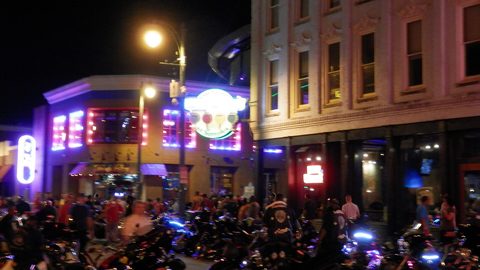 New Orleans or Memphis Which American Music City Should You Visit First
New Orleans offers denser, more serendipitous live music and later nights; Memphis is cheaper, more compact, and historically deeper for blues and soul.
New Orleans or Memphis Which American Music City Should You Visit First
New Orleans offers denser, more serendipitous live music and later nights; Memphis is cheaper, more compact, and historically deeper for blues and soul.
-
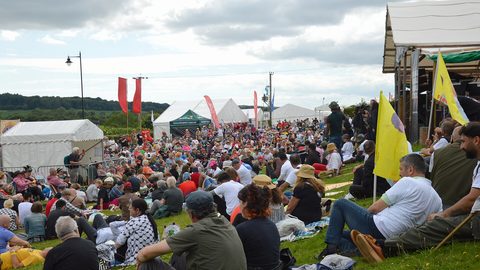 New Orleans Jazz Fest or an Ordinary Music Week The Trade Nobody Tells You
Jazz Fest brings legendary lineups but packed clubs and surge pricing; an ordinary week offers breathing room, lower costs, and the same local bands.
New Orleans Jazz Fest or an Ordinary Music Week The Trade Nobody Tells You
Jazz Fest brings legendary lineups but packed clubs and surge pricing; an ordinary week offers breathing room, lower costs, and the same local bands.