Historic New Orleans Hotels and What Festival Season Costs
New Orleans historic and boutique hotels from the Monteleone to the Pontchartrain, and what Jazz Fest minimum stays and surge pricing do to the bill.
The Brutal Fact About New Orleans Hotel Pricing
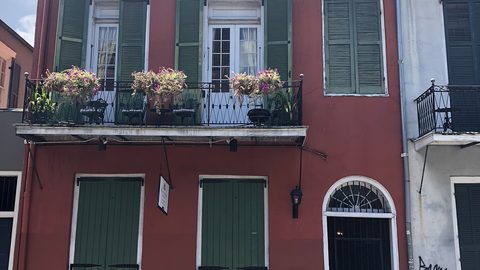
New Orleans has roughly 26,000 hotel rooms citywide. The French Quarter can offer only about 4,500 of them, and many of those are housed in 18th and 19th century Creole townhouses with interior courtyards, vintage tile, and room counts between 5 and 80. The historic product is finite. When demand spikes during Mardi Gras (February 16, 2027) or Jazz Fest (April 22 to May 2, 2027), the math goes straight to 2x to 5x the standard rack rate, and the inventory will be sold out four to eight months in advance for the latter, six to twelve months for the former. If you do not have a reservation for the Saturday before Mardi Gras by the previous summer, you are looking at whatever is left. Whatever is left will be grim.
The Hotels That Earn the Premium
Hotel Monteleone: The Stage
Book the Hotel Monteleone if you want a lobby that feels like a stage. The Carousel Bar is a fully rotating relic that draws a crowd even on a Tuesday afternoon in October, and the building itself dates to 1886. The downside: the Carousel Bar crowd means your check-in is slowed by gawkers, and the rooms facing Royal Street pick up noise from the music clubs and the horse carriages until well past 1 a.m. You pay for the location in unsteady sleep.
The Pontchartrain: Quiet And Adult
The Pontchartrain in the Garden District is a different value proposition entirely. It sits on St. Charles Avenue, a ten-minute streetcar ride from the French Quarter, and its lobby bar is quieter, more adult, and better suited to travellers who want the city's character without the constant French Quarter assault. The trade-off: the streetcar is unreliable. The St. Charles line runs on single-track sections with poor headway management. You will wait twenty minutes, see nothing, then watch three cars arrive together. Budget for ride-shares when you are on a schedule, and factor that $30 to $45 cost into your nightly comparison.
The Saint Vincent: Gothic And Bare-Bones
The Saint Vincent in the Lower Garden District occupies a former orphanage and convent, and its public spaces lean into the gothic with stained glass and a bar that feels like a chapel. The rooms are small, the walls are thin, and there is no pool. This is a hotel for people who want to be in the quiet part of town near Magazine Street's shopping and the St. Claude arts corridor, not for anyone who needs on-site amenities to justify a high rate. If you are in town for Jazz Fest and you plan to be out from 10 p.m. until 2 a.m. every night, you will barely see the building. Paying a 4x premium for a room you sleep in for six hours is an error.


What the Festival Season Costs in Hard Numbers
The Room Rate You Will Actually Pay
The baseline against which you measure everything: a standard room in a French Quarter historic inn during low season (August, when the humidity presses down and the hurricane risk is real) starts well under $200. The same room during Mardi Gras 2027 will land between $400 and $1,200 per night, with a minimum stay of three to five nights. Jazz Fest is slightly less punishing at $350 to $800 per night, but the four-night minimum is standard and the sell-out lead time runs four to eight months. You are committing to a room bill in the thousands before you buy a single ticket, eat a single po-boy, or drink a single Ramos Gin Fizz.
Taxes, Parking, And The Resort Fee Trap
Then add the fees. The combined state and local hotel tax in Orleans Parish is 16.2 percent, plus an additional $1.50 to $3.00 per night occupancy fee. A $600 room becomes $700 after tax. If you drive, French Quarter valet parking runs $45 to $65 per night. If you are staying at a CBD chain, the valet rate is $40 to $55. That is the price of another festival ticket right there.
The resort fee is a separate annoyance. Standard full-service hotels in the CBD and French Quarter charge $25 to $55 per night for Wi-Fi, pool access, and bottled water. You will not use the pool in April or May unless you are a masochist, and you will not need the Wi-Fi because cellular 5G coverage is solid across the city. You are paying for a line item that does nothing for your trip.
| Period | French Quarter Historic Inn Range | Minimum Stay | Tax And Fees Added |
|---|---|---|---|
| August (Low Season) | Well under $200/night | None | 16.2% tax + $1.50-$3.00/night |
| Jazz Fest 2027 | $350-$800/night | 3 to 4 nights | 16.2% tax + $1.50-$3.00/night + resort fee $25-$55/night |
| Mardi Gras 2027 | $400-$1,200/night | 3 to 5 nights | 16.2% tax + $1.50-$3.00/night + resort fee $25-$55/night |
| October (Secondary Peak) | Moderately above low season | Occasional 2-night | 16.2% tax + $1.50-$3.00/night |
When the CBD Chain Hotel is the Smarter Move
The CBD holds roughly 10,000 rooms spread across Marriott, Hilton, Hyatt, InterContinental, Loews, Le Méridien, Sheraton, Westin, JW Marriott, Ritz-Carlton, Four Seasons, Omni, Sonesta, and dozens more. These are not charming. They are efficient. You will get a predictable room, an elevator that works, a front desk that answers the phone, and blackout curtains that block the 6 a.m. light streaming through a historic hotel's single-pane windows.
The case for the CBD chain: you are planning to spend your days and nights on Frenchmen Street, at Preservation Hall, in the Maple Leaf Bar in Uptown, or at the Fair Grounds for Jazz Fest. You do not need a hotel with a courtyard or a Carousel Bar. You need a shower, a bed, and a door that locks. The difference between $200 and $600 per night is $400 per night. Over a four-night festival stay, that is $1,600. That pays for two dinners at Mr. B's, a round of oysters at Felix's every afternoon, a Sazerac tasting at the Sazerac House, and a stack of beignets at Cafe du Monde with cash left over for a Mardi Gras Indian suit at the Backstreet Cultural Museum gift shop.
The downside of the CBD chain: you lose the character. You will not step out of your hotel into the sensory overload of Royal Street at dusk. You will not have a courtyard to sit in after midnight when the noise becomes too much. You are trading atmosphere for function. That is not a bad trade if the function matters more.


Making the Decision: Historic or Efficient
When To Pay For Character
Book a historic boutique hotel if your trip is about the hotel itself. If you want to drink at the Carousel Bar without fighting the street crowd, if you plan to spend a morning reading in a courtyard with a fountain, if the architecture is part of the reason you came, then the premium is the cost of admission. Accept the noise, the broken sidewalks, the lack of elevators, and the terrible single-pane windows. That is what the character costs.
When To Buy Function Instead
Book a CBD chain if your trip is about the city. If you are here for brass bands, for fried oyster po-boys at Parkway Bakery, for swamp boardwalks at Jean Lafitte, for the 10 p.m. to 2 a.m. music window, then a hotel is a recovery station, not a destination. Use the saved money to extend your trip by a day. Use it to buy a second-line parasol at a Mardi Gras Indian supply store. Use it to cover the $3 day pass for the RTA bus network when the streetcar fails you.
Who This City Works For
This city is not for everyone. It is for music obsessives who chase jazz and bounce in their natural habitat, for serious eaters willing to schedule entire days around specific meals, for nightlife seekers who do not have a bedtime, for history and architecture buffs who want Creole culture, not American history packaged for tourists, and for group travellers who tolerate crowds and chaos because the payoff is a memory that will not fade.
It is not for people who need quiet, cleanliness, and order to relax. It is not for anyone with significant mobility issues who will struggle with the punishing historic infrastructure, potholes that twist ankles, and street flooding after a sudden downpour. It is not for families with young children who find the city's adult vices inescapable. It is not for budget travellers who did not account for a city that monetises fun aggressively and starts the tab at $600 a night in festival season.
Common Questions
How far in advance do I need to book a historic boutique hotel for Mardi Gras or Jazz Fest?
For Mardi Gras, book six to twelve months ahead. For Jazz Fest, book four to eight months ahead. The inventory of historic French Quarter hotels is small, and the 3-to-5 night minimum stays lock up rooms early.
What is the cheapest way to stay in the French Quarter during peak season?
There is no cheap option in the French Quarter during festival season. The lowest standard room will start near $350 per night for Jazz Fest and $400 for Mardi Gras before taxes, fees, and valet parking. A CBD chain hotel is the only way to stay near the Quarter without the historic premium.
Are the resort fees mandatory at historic boutique hotels?
Yes. Standard full-service hotels in the French Quarter and CBD charge $25 to $55 per night for resort fees that cover Wi-Fi, pool access, and bottled water. You cannot negotiate them away.
Is it worth staying in the Garden District for festival season?
Yes, if you value quieter evenings and lower rates. The Pontchartrain offers historic character without the French Quarter noise. Factor in ride-share costs of $30 to $45 each way because the St. Charles streetcar is unreliable, and budget for the extra travel time.
Can I find a historic boutique hotel in the Warehouse District instead?
Yes. The Warehouse District has about 3,500 rooms, many in converted 19th and early 20th century warehouses with exposed brick and high ceilings. These hotels offer character with better soundproofing than French Quarter Creole townhouses, but the walk to Bourbon Street is 15 to 20 minutes.
What happens if I arrive without a reservation during Mardi Gras?
You will pay top dollar for whatever is left, and what is left will be in Lakeview or Kenner, not the Quarter. The city operates at extreme occupancy during Mardi Gras. Do not risk it.
Should I avoid August entirely due to hurricane risk?
Late July through early September carries real hurricane risk and oppressive heat. If you book in that window, buy travel insurance that covers weather cancellations and accept that you might get flooded out. The prices are low for a reason.
Read next
-
 Where to Stay in New Orleans by How Late You Plan to Be Out
Choose your New Orleans neighborhood by your bedtime: French Quarter for 4 a.m. chaos, Marigny for the Frenchmen Street stagger, CBD for midnight quiet.
Where to Stay in New Orleans by How Late You Plan to Be Out
Choose your New Orleans neighborhood by your bedtime: French Quarter for 4 a.m. chaos, Marigny for the Frenchmen Street stagger, CBD for midnight quiet.
-
 Flying into New Orleans Memphis and Nashville for a Music Triangle Trip
How to book flights for a New Orleans, Memphis, and Nashville music trip, including open-jaw strategies, MSY ground transport, and the case for driving one leg.
Flying into New Orleans Memphis and Nashville for a Music Triangle Trip
How to book flights for a New Orleans, Memphis, and Nashville music trip, including open-jaw strategies, MSY ground transport, and the case for driving one leg.
-
 New Orleans Beyond the Music What to Do Between the Nights
Daytime New Orleans for the music traveller who sleeps late: shaded sculpture gardens, powerful Bywater murals, and streetcar rides through the Garden District.
New Orleans Beyond the Music What to Do Between the Nights
Daytime New Orleans for the music traveller who sleeps late: shaded sculpture gardens, powerful Bywater murals, and streetcar rides through the Garden District.
-
 The New Orleans Calendar Mardi Gras Jazz Fest and the Summer Slump
-
 Getting Around New Orleans at Night Without a Car
How to get around New Orleans after midnight when streetcars stop, ride-share prices spike at 2 a.m., and the sidewalks are your fastest—and most hazardous—option.
Getting Around New Orleans at Night Without a Car
How to get around New Orleans after midnight when streetcars stop, ride-share prices spike at 2 a.m., and the sidewalks are your fastest—and most hazardous—option.
-
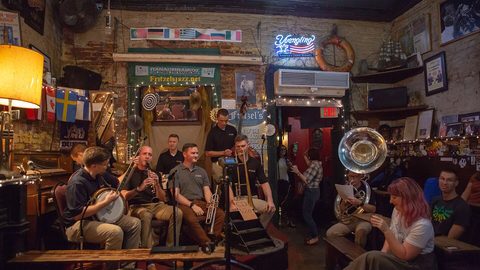 Three and Five Nights in New Orleans Built Around the Music
A music-first itinerary for 3 or 5 nights in New Orleans that respects the city's late-night rhythm, with recovery mornings and a dedicated brass band night built in.
Three and Five Nights in New Orleans Built Around the Music
A music-first itinerary for 3 or 5 nights in New Orleans that respects the city's late-night rhythm, with recovery mornings and a dedicated brass band night built in.
-
 Music America Road Trip: Where the Sound Comes From and How to Drive It
Map your cross-country music pilgrimage by car, linking the Mississippi Delta, Appalachia, and the Rust Belt into one continuous American soundtrack.
Music America Road Trip: Where the Sound Comes From and How to Drive It
Map your cross-country music pilgrimage by car, linking the Mississippi Delta, Appalachia, and the Rust Belt into one continuous American soundtrack.
-
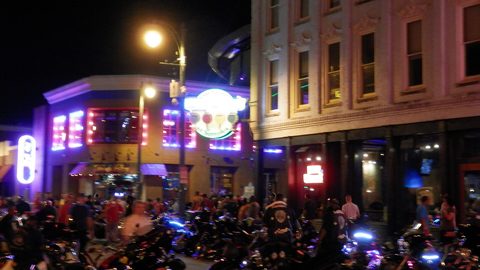 New Orleans or Memphis Which American Music City Should You Visit First
New Orleans offers denser, more serendipitous live music and later nights; Memphis is cheaper, more compact, and historically deeper for blues and soul.
New Orleans or Memphis Which American Music City Should You Visit First
New Orleans offers denser, more serendipitous live music and later nights; Memphis is cheaper, more compact, and historically deeper for blues and soul.
-
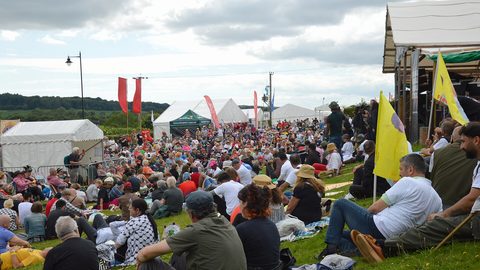 New Orleans Jazz Fest or an Ordinary Music Week The Trade Nobody Tells You
Jazz Fest brings legendary lineups but packed clubs and surge pricing; an ordinary week offers breathing room, lower costs, and the same local bands.
New Orleans Jazz Fest or an Ordinary Music Week The Trade Nobody Tells You
Jazz Fest brings legendary lineups but packed clubs and surge pricing; an ordinary week offers breathing room, lower costs, and the same local bands.