Reading a New Orleans Shotgun House What the Bargeboard Tells You
A practical guide to Reading a New Orleans Shotgun House What the Bargeboard Tells You.


Reading a New Orleans Shotgun House What the Bargeboard Tells You
Walk through the Upper Ninth Ward today and you will see rows of bright, narrow houses with deep porches and steep gabled roofs. They look like classic New Orleans shotguns, but most were built after 2005. These are the homes of the Musicians' Village, a neo-shotgun community conceived by Branford Marsalis and Harry Connick Jr. and realized by New Orleans Area Habitat for Humanity. The architecture here is deliberate, a modern echo of a much older building tradition. To understand what these houses are referencing, you have to look at a single, often misunderstood detail: the bargeboard.
In New Orleans, that word carries a double history. It means one thing to a carpenter looking at a roof, and something entirely different to a historian looking at a wall. Both meanings tell the story of how the city built itself from the river up.
The Two Lives of a Single Word
The City of New Orleans Historic District Landmarks Commission codifies the dual definition clearly. First, a bargeboard is an ornamental board attached to the projected eave of a gable roof. This is the decorative trim you see running along the rake of a roof, often carved or scalloped in Victorian examples. Second, and more fundamentally local, bargeboard refers to large wooden planks salvaged from dismantled river flatboats that were used to construct early buildings. The Vieux Carré Commission, which governs the French Quarter, uses the same dual definition in its own glossary.
This is not a case of one word drifting into two unrelated meanings. The roof trim and the wall plank share a common ancestor: the Mississippi River flatboat. In the 19th century, flatboats floated goods downstream from the Ohio and Kentucky river valleys to New Orleans. The journey was one-way. Poling a heavy, flat-bottomed boat back upstream against the current was so impractical that the boats were simply dismantled on arrival. Their lumber, sold cheaply, became an abundant local building material.
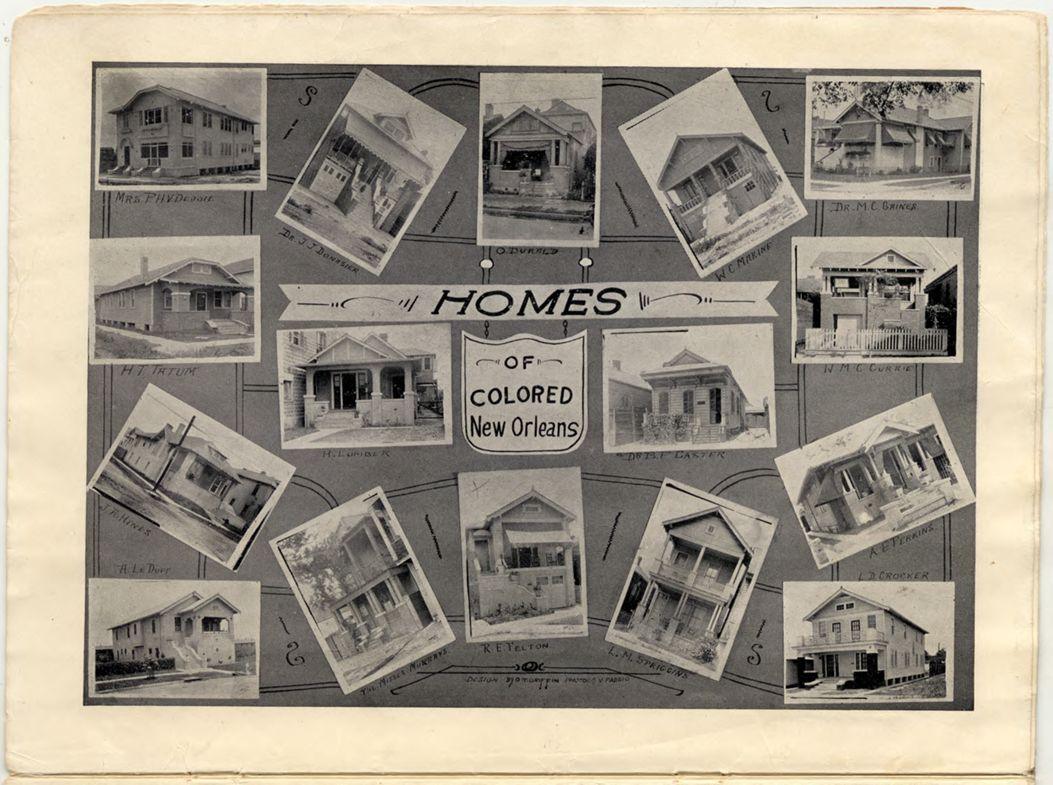

How to Spot a True Bargeboard Wall
If you are standing in front of an old Creole cottage or shotgun house in the Marigny, Bywater, or Tremé, you might be looking at a structure built from recycled river boats. The planks were typically softwoods such as poplar or pine, about two inches thick, ranging from one to two feet in width, and up to 20 feet in length. Builders installed them vertically, which created a solid, load-bearing wall that eliminated the need for traditional stud framing.
The telltale sign of authentic bargeboard is not the wood grain or the patina. It is a set of holes. Rope holes, used to lash the flatboat timbers together during their river journey, often remain visible in the planks after they were repurposed into walls. Spotting these holes is the closest thing to a material birth certificate for an early New Orleans house.
A Kentucky River Boat Becomes a New Orleans Cottage
A documented example from 1856 traces this process with unusual precision. A flatboat was built by David Williams on the Kentucky River. It was dismantled at Carrollton Bend, just above New Orleans, by lumber merchant J.S. MacEwen. The resulting bargeboard did not become a single accent wall or a patch repair. It was used to build an entire cottage,walls, joists, and rafters. This was a complete structural system, not a decorative afterthought.
This kind of material reuse shaped the very form of the city's vernacular architecture. The shotgun house, defined by the Historic District Landmarks Commission as a one-room-wide, several-rooms-deep residence with no internal hallway, found its perfect structural match in these long, thick planks. A room could be the width of a single bargeboard plank laid horizontally as a sill, or a wall could rise the full height of a plank set on end.
Why the Shotgun Got So Narrow
The shotgun house's long, lean silhouette was not an aesthetic choice. It was a mathematical response to the standard New Orleans city lot, which measured 30 by 120 feet. That narrow frontage could not accommodate a wider residence, so builders stretched the house deep into the lot. The roof ridge runs perpendicular to the street, whether the roof is a gable or a hip. Each room opens directly into the next, a sequence of spaces that pulls you from the front porch to the back yard without a corridor.
When bargeboard was used for the walls, the structural logic aligned perfectly with the spatial logic. The vertical planks created a monolithic shell that was quick to erect and surprisingly durable. The material's history as a boat hull, designed to be watertight and strong, translated well to a house wall in a city that lives in a constant negotiation with water.
The Musicians’ Village and the Neo-Shotgun
The Musicians' Village in the Upper Ninth Ward does not use salvaged bargeboard. Its 72 single-family homes are wood-frame construction with clapboard siding, raised nearly four feet above street level on concrete-block piers. But the design, by architect Michael Bell of Bell Architects, deliberately echoes the historic shotgun vernacular. Bell raised ceiling heights and roof pitches from Habitat's standard model to more closely resemble the local tradition, and added simplified Arts and Crafts detailing. The houses have hipped or gabled roofs, front porches, and bright pastel colours.
The development is set on traditional 30-foot-wide lots with six-foot side setbacks, replicating the dense streetscape pattern of historic New Orleans shotgun neighbourhoods. Walking these streets, you feel the rhythm of the old city, even though the materials are new. The Ellis Marsalis Center for Music, a two-story building designed by Mathes Brierre Architects and completed in 2008, anchors the village at the intersection of N. Prieur and Bartholomew streets.
If you want to visit the Ellis Marsalis Center for Music, you should verify its current public access policies, performance schedule, and any visitor restrictions directly with the centre before planning your trip. The centre's official website is the authoritative source for that information.
Reading a House from the Outside In
When you look at a shotgun house, whether a 19th-century original in Tremé or a 21st-century neo-shotgun in the Musicians' Village, you are reading a set of decisions shaped by geography, economics, and material availability. The bargeboard wall tells you that the builder saw value in what others discarded, that the river was not just a shipping route but a supply chain for shelter. The narrow lot tells you that the city's colonial land subdivision still dictates how people live today. The front porch, raised high on piers, tells you about the practical response to heat, flooding, and the social life of the street.
The Musicians' Village houses do not have rope holes in their clapboards. But they carry the memory of bargeboard in their proportions, their relationship to the lot, and their role in stitching a neighbourhood back together after Hurricane Katrina. To read a New Orleans shotgun house is to read the river, the lot, and the plank all at once.
Sources and verification
- nola.gov — Research source checked for this guide
- nola.gov — Research source checked for this guide
- adamickarchitecture.com — Research source checked for this guide
- pontchartrain.net — Research source checked for this guide
- 64parishes.org — Research source checked for this guide
- sah-archipedia.org — Research source checked for this guide
Read next
-
 New Orleans Hotels The Historic Boutique and Festival Premium
New Orleans historic and boutique hotels from the Monteleone to the Pontchartrain, and what Jazz Fest minimum stays and surge pricing do to the bill.
-
 Where to Stay in New Orleans by How Late You Plan to Be Out
Choose your New Orleans neighborhood by your bedtime: French Quarter for 4 a.m. chaos, Marigny for the Frenchmen Street stagger, CBD for midnight quiet.
-
 Flying into New Orleans Memphis and Nashville for a Music Triangle Trip
How to book flights for a New Orleans, Memphis, and Nashville music trip, including open-jaw strategies, MSY ground transport, and the case for driving one leg.
-
 New Orleans Beyond the Music What to Do Between the Nights
Daytime New Orleans for the music traveller who sleeps late: shaded sculpture gardens, powerful Bywater murals, and streetcar rides through the Garden District.
-
 The New Orleans Calendar Mardi Gras Jazz Fest and the Summer Slump
-
 Getting Around New Orleans at Night Without a Car
How to get around New Orleans after midnight when streetcars stop, ride-share prices spike at 2 a.m., and the sidewalks are your fastest—and most hazardous—option.
-
 Music America Road Trip: Where the Sound Comes From and How to Drive It
Map your cross-country music pilgrimage by car, linking the Mississippi Delta, Appalachia, and the Rust Belt into one continuous American soundtrack.
-
 Finding a Sunday Second Line in New Orleans Without a Social Media Hunt
A practical guide to Finding a Sunday Second Line in New Orleans Without a Social Media Hunt.
-
 New Orleans or Memphis Which American Music City Should You Visit First
New Orleans offers denser, more serendipitous live music and later nights; Memphis is cheaper, more compact, and historically deeper for blues and soul.